The packaged drinking water industry is growing rapidly in India as people become more conscious about clean, safe, and hygienic drinking water. From small water bottle businesses to large-scale packaged water brands, every business needs a reliable purification and packaging system to maintain consistent water quality.
However, setting up a successful water bottling business is not only about purchasing machines. The quality of your complete plant depends greatly on the manufacturer you choose. Selecting experienced and reliable Packaged Drinking Water Plant Manufacturers in India can help you get the right technology, suitable production capacity, proper installation support, and a system designed according to your business needs.
With many manufacturers available in the market, choosing the right company may seem difficult. This guide explains the most important factors you should consider before investing in a packaged drinking water plant.

What Is a Packaged Drinking Water Plant?
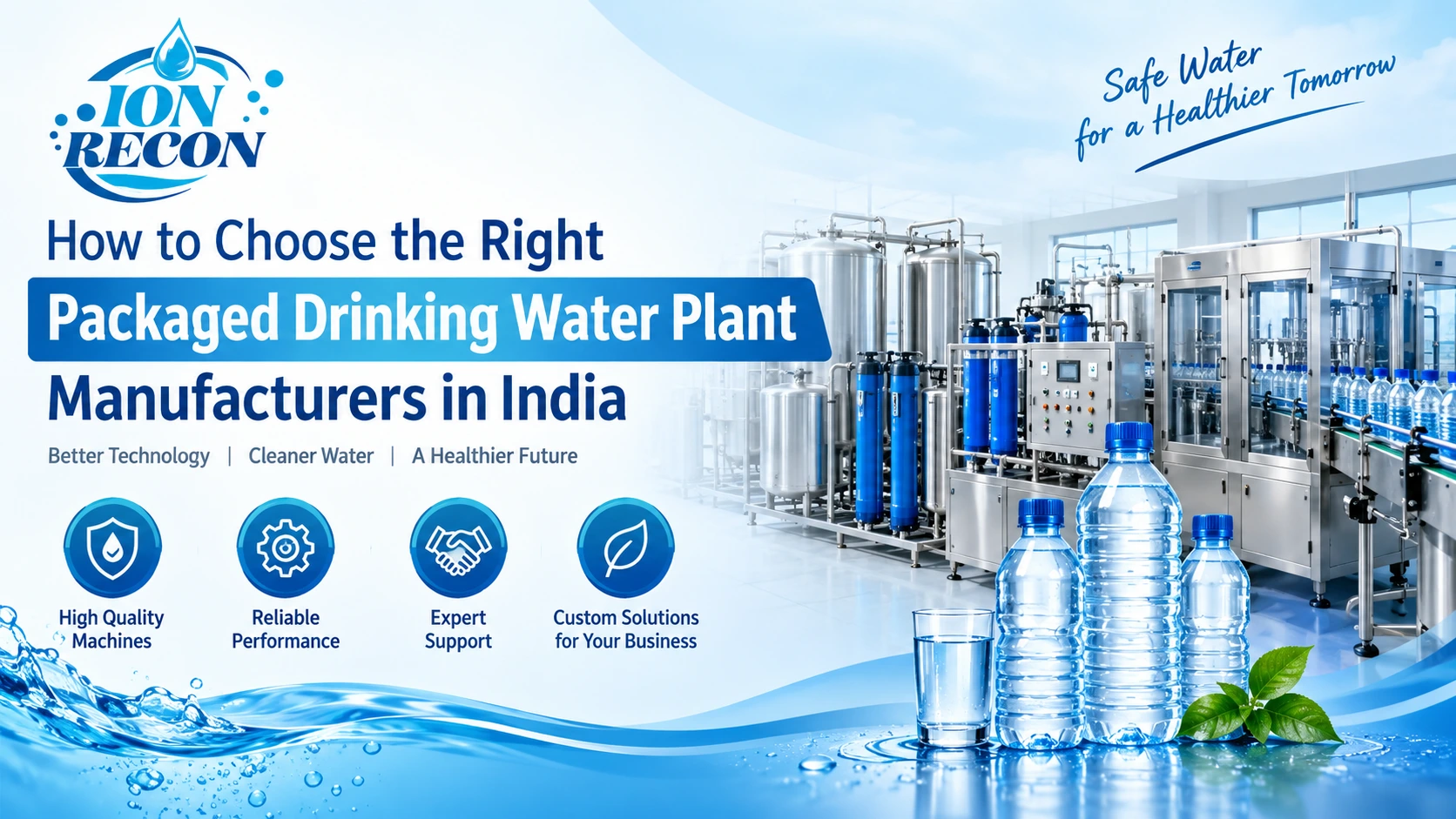
A packaged drinking water plant is a complete system used to treat raw water, remove unwanted impurities, disinfect the purified water, and prepare it for hygienic packaging.
Depending on the source and required water quality, a plant may include different purification and processing stages such as:
- Raw water storage
- Sand filtration
- Activated carbon filtration
- Micron filtration
- Reverse Osmosis (RO)
- UV disinfection
- Ozonation
- Purified water storage
- Bottle or jar rinsing
- Water filling
- Capping and sealing
- Labeling and final packaging
The exact configuration can vary according to raw water quality, plant capacity, packaging format, and business requirements. This is why choosing a manufacturer with good technical knowledge is extremely important.
Why Does Choosing the Right Manufacturer Matter?
A packaged drinking water plant is a long-term business investment. Choosing machinery only on the basis of a low initial price can lead to higher maintenance expenses, frequent breakdowns, poor production efficiency, and inconsistent output.
A dependable manufacturer helps you select equipment according to your actual production requirements instead of simply selling a standard machine.
The right manufacturer can also help in planning plant capacity, machinery layout, water treatment stages, automation level, utility requirements, installation, operator training, and future expansion.
1. Check the Manufacturer’s Industry Experience
Experience should be one of the first things you check. An experienced manufacturer generally understands the practical challenges involved in water purification, bottling, filling, and packaging.
Ask the manufacturer about previously completed projects, available plant capacities, technologies used, installation experience, and industries served.
A company with practical manufacturing and commissioning experience is generally better prepared to recommend a system suitable for your project.
2. Understand Your Required Production Capacity
Before approaching Packaged Drinking Water Plant Manufacturers in India, determine how much packaged water you want to produce.
Plant capacities can vary greatly depending on the business model. A small local business may require a relatively compact system, while a larger commercial operation may need high-capacity automatic machinery.
Consider your present demand as well as expected future growth. Buying an unnecessarily large plant can increase investment and operating costs, while choosing a plant that is too small may limit production as your business grows.
A good manufacturer should help you find the right balance between present requirements and future expansion.
3. Check the Water Treatment Technology
Raw water quality is not the same everywhere. Borewell water, municipal water, and other water sources can contain different levels and types of dissolved minerals, suspended particles, hardness, microorganisms, and other impurities.
Therefore, the treatment process should ideally be selected after understanding the characteristics of the source water.
Ask the manufacturer which treatment technologies are proposed and why they are required. Depending on the project, equipment may include pressure sand filters, activated carbon filters, softening or dosing systems, RO units, micron filters, UV systems, and ozone systems.
The important point is that the treatment system should be designed around the actual water conditions rather than using the same configuration for every project.
4. Pay Attention to Machine and Material Quality
Machine construction has a direct impact on hygiene, durability, maintenance, and long-term performance.
Check the quality and grade of materials used for relevant water-contact components, storage tanks, pipelines, filtration units, filling equipment, and structural parts.
You should also inspect the quality of pumps, electrical panels, valves, sensors, membranes, motors, and other important components.
Reliable components may cost more initially, but they can help reduce unexpected downtime and frequent replacement expenses.
5. Compare Automation Levels
Packaged water plants can be designed with different levels of automation.
Smaller businesses may prefer semi-automatic systems because of their lower initial investment and simpler operation. Businesses handling larger production volumes may benefit from more automated rinsing, filling, capping, labeling, and packaging operations.
Before making a decision, compare the advantages and operating requirements of each option.
Do not automatically select the highest level of automation. Choose a system that suits your production volume, workforce availability, budget, and future plans.
6. Check Hygiene-Focused Plant Design
Hygiene is extremely important when water is being prepared for human consumption. The plant should be designed to reduce unnecessary contamination risks during treatment, storage, transfer, filling, and packaging.
Look for easy-to-clean equipment, suitable piping arrangements, hygienic water-contact surfaces, controlled storage, and properly planned filling sections.
Plant layout also matters. A well-planned facility can create a smoother flow from water treatment to final packaging while making cleaning, inspection, and maintenance easier.
7. Ask About Customisation
Every packaged water project is different. Available floor space, source water quality, required capacity, bottle sizes, automation level, and budget may vary from one customer to another.
Therefore, choose a manufacturer that can offer suitable customisation instead of forcing your project into a fixed machine configuration.
For example, Ion Recon can be considered when evaluating a packaged drinking water plant solution based on specific processing and production requirements. A proper discussion about capacity, treatment stages, available space, and packaging needs helps in selecting a more practical plant configuration.
8. Evaluate Energy and Water Efficiency
Operating expenses continue throughout the life of the plant, so efficiency should be considered before purchasing machinery.
Ask about electricity requirements, pump efficiency, RO recovery, wastewater generation, cleaning requirements, and overall utility consumption.
A plant with a lower purchase price is not necessarily cheaper in the long run. A slightly higher initial investment may make better business sense when the system offers reliable operation and lower ongoing expenses.
9. Check Installation and Technical Support
The manufacturer’s responsibility should not end when the machinery reaches your factory.
Ask whether the company provides installation, commissioning, trial runs, operator guidance, troubleshooting assistance, maintenance support, and spare parts.
Good after-sales support becomes especially important when a machine stops unexpectedly. Quick access to technical assistance can help reduce production downtime.
10. Understand Applicable Quality and Regulatory Requirements
A packaged drinking water business in India needs to operate according to applicable government, food-safety, product-quality, labeling, and local regulatory requirements.
Before establishing the plant, understand which licences, certifications, testing requirements, and approvals apply to your particular business.
Requirements can change over time and may vary according to the product and facility, so businesses should verify current requirements with the relevant authorities and qualified professionals instead of relying only on machinery suppliers.
11. Compare the Complete Project Cost
When comparing quotations, do not look only at the final price.
Check exactly what each quotation includes. One manufacturer may quote only the main water treatment machinery, while another quotation may cover storage tanks, filters, RO equipment, filling machinery, installation, commissioning, and additional accessories.
Compare:
FactorWhat You Should Check
Plant Capacity
Actual production requirement
Treatment System
Suitable for source water
Construction
Material and component quality
Automation
Manual, semi-automatic, or automatic
Utilities
Power and water requirements
Installation
Included or charged separately
Training
Operator guidance availability
Warranty
Coverage and conditions
Spare Parts
Availability and lead time
Support
Post-installation technical assistance
A detailed comparison gives you a much clearer picture of the actual investment.
12. Ask for a Detailed Technical Proposal
Before placing an order, ask for a proper technical proposal.
It should clearly mention plant capacity, treatment stages, major equipment, material specifications, automation level, utility requirements, scope of supply, installation terms, warranty conditions, delivery period, and commercial terms.
Avoid making a major investment based only on a short quotation with unclear specifications.
Questions to Ask Before Selecting a Manufacturer
Before finalising your supplier, ask these important questions:
- What plant capacity is suitable for my business?
- Is the treatment system designed according to my source water?
- What materials are used in water-contact components?
- What is included in the quoted price?
- What are the electricity and water requirements?
- Is installation and commissioning included?
- Will you provide operator training?
- How easily are spare parts available?
- What warranty is provided?
- What after-sales technical support is available?
Clear answers to these questions can make it easier to compare different manufacturers.
Common Mistakes to Avoid
One of the biggest mistakes is choosing a manufacturer only because they offer the lowest price. Other common mistakes include purchasing the wrong capacity, ignoring source-water testing, overlooking operating expenses, not checking after-sales support, and failing to understand what is actually included in the quotation.
You should also avoid purchasing a system without considering future business growth. A properly planned plant should meet today’s production needs while allowing practical expansion where possible.
Why Consider Ion Recon?
When selecting a packaged drinking water plant, businesses need a solution that focuses on water treatment performance, practical plant design, reliable machinery, and long-term usability.
Ion Recon provides solutions for businesses looking to establish or upgrade their packaged drinking water processing setup. The focus should always remain on understanding the customer’s production capacity, raw water conditions, automation requirements, available space, and operational expectations before recommending a suitable system.
Rather than looking at machinery as an individual purchase, businesses can benefit from evaluating the complete process—from raw water treatment to hygienic filling and final packaging.
Final Thoughts
Choosing the right Packaged Drinking Water Plant Manufacturers in India is an important decision that can influence product quality, operating costs, production efficiency, and the long-term growth of your water business.
Do not make your decision based on price alone. Compare technical experience, treatment technology, construction quality, plant capacity, automation, energy efficiency, customisation, installation services, warranty, spare parts, and after-sales support.
Most importantly, understand your own requirements before requesting quotations. When your plant capacity, source-water conditions, packaging needs, budget, and future plans are clear, it becomes much easier to select the right manufacturer and build a reliable packaged drinking water business.