Introduction to Zero Liquid Discharge (ZLD)
Zero Liquid Discharge (ZLD) is an advanced wastewater treatment process designed to recover and reuse water while minimizing the discharge of liquid waste into the environment. It is widely used in industries that consume large amounts of water or generate wastewater containing dissolved salts, chemicals, and other contaminants.
Industries such as pharmaceuticals, textiles, chemicals, power generation, and manufacturing can benefit from ZLD systems to manage wastewater efficiently and reduce freshwater consumption.
Guest Post Guide suggest, Green Aqua Technologies provides wastewater treatment solutions designed to meet different industrial requirements. With a focus on efficient water recovery and sustainable wastewater management, the company supports industries in adopting suitable treatment technologies, including Zero Liquid Discharge systems.
What Is a Zero Liquid Discharge System?
A Zero Liquid Discharge system is a wastewater treatment arrangement that aims to recover the maximum possible amount of reusable water from industrial effluent. The remaining concentrated waste is processed further to recover additional water and separate dissolved solids for appropriate handling and disposal.
Unlike conventional wastewater treatment systems, which may discharge treated water after meeting applicable standards, a ZLD system is designed to minimize liquid waste leaving the facility.
The main objectives of a ZLD system include:
- Recovering and reusing treated wastewater.
- Reducing freshwater consumption in industrial operations.
- Minimizing liquid effluent discharge.
- Concentrating dissolved salts and other residual solids.
- Supporting environmental compliance and sustainable water management.
How Does a Zero Liquid Discharge System Work?
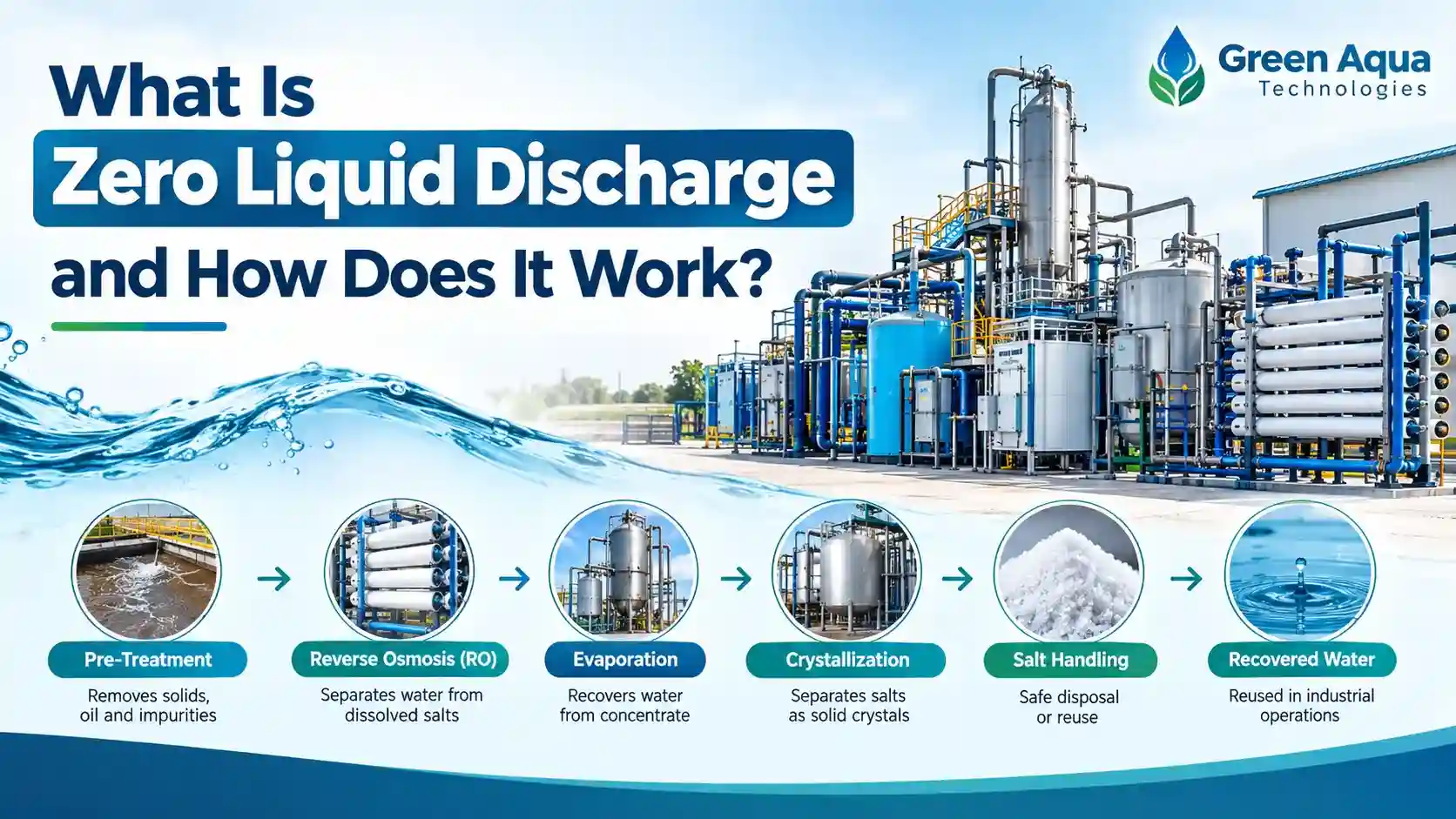
A Zero Liquid Discharge system works through multiple treatment stages. The exact process depends on wastewater characteristics, dissolved solids concentration, water quality requirements, and the intended reuse application.
1. Wastewater Collection and Pre-Treatment
The process begins with collecting industrial wastewater from different production operations. The wastewater is then passed through pre-treatment equipment to remove suspended solids, oil, grease, and other impurities.
Depending on the wastewater composition, pre-treatment may include filtration, chemical dosing, pH adjustment, clarification, or other suitable processes. This stage helps protect downstream equipment and improves overall treatment efficiency.
2. Reverse Osmosis (RO) Treatment
After pre-treatment, wastewater may be passed through a Reverse Osmosis (RO) system. RO membranes separate a large portion of dissolved salts and impurities from water under pressure.
The recovered permeate can be reused in suitable industrial applications, depending on its quality. The remaining concentrated stream, known as RO reject or concentrate, is sent for further treatment.
3. Concentration of Wastewater
The RO reject contains a higher concentration of dissolved salts and other contaminants. Additional concentration methods may be used to reduce its volume before evaporation.
Depending on the application, these methods can include membrane concentration, mechanical vapor recompression, or other specialized technologies. The selection depends on the wastewater composition, operating costs, and recovery targets.
4. Evaporation Process
The concentrated wastewater is processed in an evaporator, where heat is used to convert water into vapor. The vapor is then condensed to recover water for reuse, provided it meets the required quality standards.
Evaporators are important components of many ZLD systems because they help recover water from streams with high dissolved solids concentrations.
5. Crystallization and Salt Separation
The remaining concentrated solution is sent to a crystallizer or another suitable solids-separation process. As the solution becomes more concentrated, dissolved salts may form crystals that can be separated from the remaining liquid.
The recovered solids are then assessed for suitable reuse or disposal according to their composition and applicable regulations.
6. Water Recovery and Reuse
The water recovered from different treatment stages is checked against the requirements of its intended application. It may be reused for cooling towers, process water, washing, or other industrial purposes after any necessary additional treatment.
This reduces dependence on freshwater sources and helps industries improve their overall water management.
Key Components of a Zero Liquid Discharge Plant
A ZLD plant consists of several treatment units that work together to recover water and manage concentrated waste.
| Equipment | Function |
|---|---|
| Pre-treatment unit | Removes suspended solids and other impurities |
| Filtration system | Reduces particles before membrane treatment |
| RO system | Separates water from a large portion of dissolved salts |
| Evaporator | Recovers water from concentrated wastewater |
| Crystallizer | Helps separate dissolved salts as solid crystals |
| Sludge and salt handling system | Collects and manages residual solids |
| Control system | Monitors and controls plant operation |
The equipment configuration varies according to wastewater characteristics, plant capacity, and the required water recovery level.
Benefits of Zero Liquid Discharge Technology
1. Water Conservation
ZLD systems help recover water from industrial wastewater, allowing suitable treated water to be reused in manufacturing and other operations. This can significantly reduce freshwater requirements.
2. Reduced Liquid Waste Discharge
A properly designed ZLD system minimizes or eliminates routine liquid effluent discharge from the treatment process. This is particularly valuable for facilities facing strict wastewater discharge requirements.
3. Better Wastewater Management
ZLD technology provides a structured approach to treating complex industrial wastewater containing dissolved salts, chemicals, and other contaminants.
4. Improved Resource Efficiency
Reusing recovered water can improve resource utilization and reduce the volume of wastewater requiring external management.
5. Support for Environmental Compliance
ZLD can help industries meet applicable environmental requirements when the system is properly designed, operated, and maintained. Actual compliance depends on the site’s permits and regulatory conditions.
Industries That Use Zero Liquid Discharge Systems
Zero Liquid Discharge technology can be suitable for various industries where wastewater recovery and discharge reduction are important.
- Textile Industry: Manages wastewater generated during dyeing, washing, and finishing operations.
- Pharmaceutical Industry: Helps treat wastewater generated during manufacturing and cleaning processes.
- Chemical Industry: Supports the treatment of wastewater containing dissolved chemicals and salts.
- Power Plants: Helps manage blowdown and other wastewater streams where ZLD is required.
- Food and Beverage Industry: Supports water recovery from selected wastewater streams, depending on their organic load and composition.
- Manufacturing Industry: Helps facilities reuse treated water and reduce wastewater discharge.
The treatment process must be selected according to the specific characteristics of each industry’s wastewater.
Zero Liquid Discharge vs. Conventional Wastewater Treatment
| Parameter | Conventional Treatment | Zero Liquid Discharge |
|---|---|---|
| Main objective | Treat wastewater to the required discharge or reuse quality | Recover water and minimize liquid discharge |
| Water recovery | Depends on the treatment process | Designed for high water recovery |
| Liquid discharge | May be discharged if permitted | Aims to eliminate routine liquid discharge |
| Salt management | Depends on the system | Often includes concentration and solids separation |
| Energy requirement | Varies by treatment method | Can be higher due to evaporation and crystallization |
| Typical applications | Municipal and industrial wastewater | Industries with demanding water recovery or discharge requirements |
Why Choose Green Aqua Technologies for Zero Liquid Discharge Solutions?
Green Aqua Technologies focuses on wastewater treatment solutions for industrial and commercial requirements. Selecting an appropriate ZLD system requires an understanding of wastewater composition, water recovery targets, operating conditions, and the intended reuse of recovered water.
When evaluating a Zero Liquid Discharge plant, industries should consider:
- Wastewater flow rate and daily treatment capacity.
- Total dissolved solids (TDS) and chemical composition.
- Required water recovery percentage.
- Suitable RO membranes and evaporation technologies.
- Energy consumption and operating costs.
- Salt disposal requirements and future maintenance needs.
Green Aqua Technologies can be considered for wastewater treatment requirements where a suitable ZLD solution is needed. The final plant configuration should be determined through wastewater analysis and engineering evaluation to ensure reliable operation.
Frequently Asked Questions (FAQs)
1. What is Zero Liquid Discharge in wastewater treatment?
Zero Liquid Discharge is a wastewater treatment approach that aims to recover reusable water and minimize liquid waste discharge by treating the remaining concentrate and separating residual solids.
2. How does a ZLD plant work?
A ZLD plant typically uses pre-treatment, membrane filtration or reverse osmosis, concentration, evaporation, and crystallization to recover water and separate dissolved solids.
3. Which industries require Zero Liquid Discharge systems?
Industries such as textiles, pharmaceuticals, chemicals, power generation, and certain manufacturing sectors may use ZLD systems depending on their wastewater characteristics and regulatory requirements.
4. Is Zero Liquid Discharge environmentally friendly?
ZLD can reduce wastewater discharge and freshwater consumption. However, its overall environmental performance depends on energy use, chemical consumption, and the safe handling of concentrated salts and other residual waste.
5. What is the difference between an RO plant and a ZLD plant?
An RO plant uses membranes to separate water from dissolved salts and impurities. A ZLD plant uses multiple treatment stages and may include RO, evaporation, and crystallization to recover water from wastewater while minimizing liquid discharge.
6. Does Green Aqua Technologies provide wastewater treatment solutions?
Green Aqua Technologies focuses on wastewater treatment technologies. For a specific ZLD project, the required capacity, treatment stages, and system configuration should be confirmed according to the wastewater analysis and project requirements.
Conclusion
Zero Liquid Discharge is an important wastewater management technology for industries looking to recover water, reduce liquid effluent discharge, and improve resource efficiency. By combining pre-treatment, reverse osmosis, concentration, evaporation, and crystallization, a properly designed ZLD system can recover substantial quantities of water while managing the remaining dissolved solids.
Green Aqua Technologies supports industrial wastewater treatment requirements with a focus on efficient and sustainable water management. Choosing the right treatment configuration can help industries improve water reuse, manage wastewater responsibly, and support long-term operational needs.