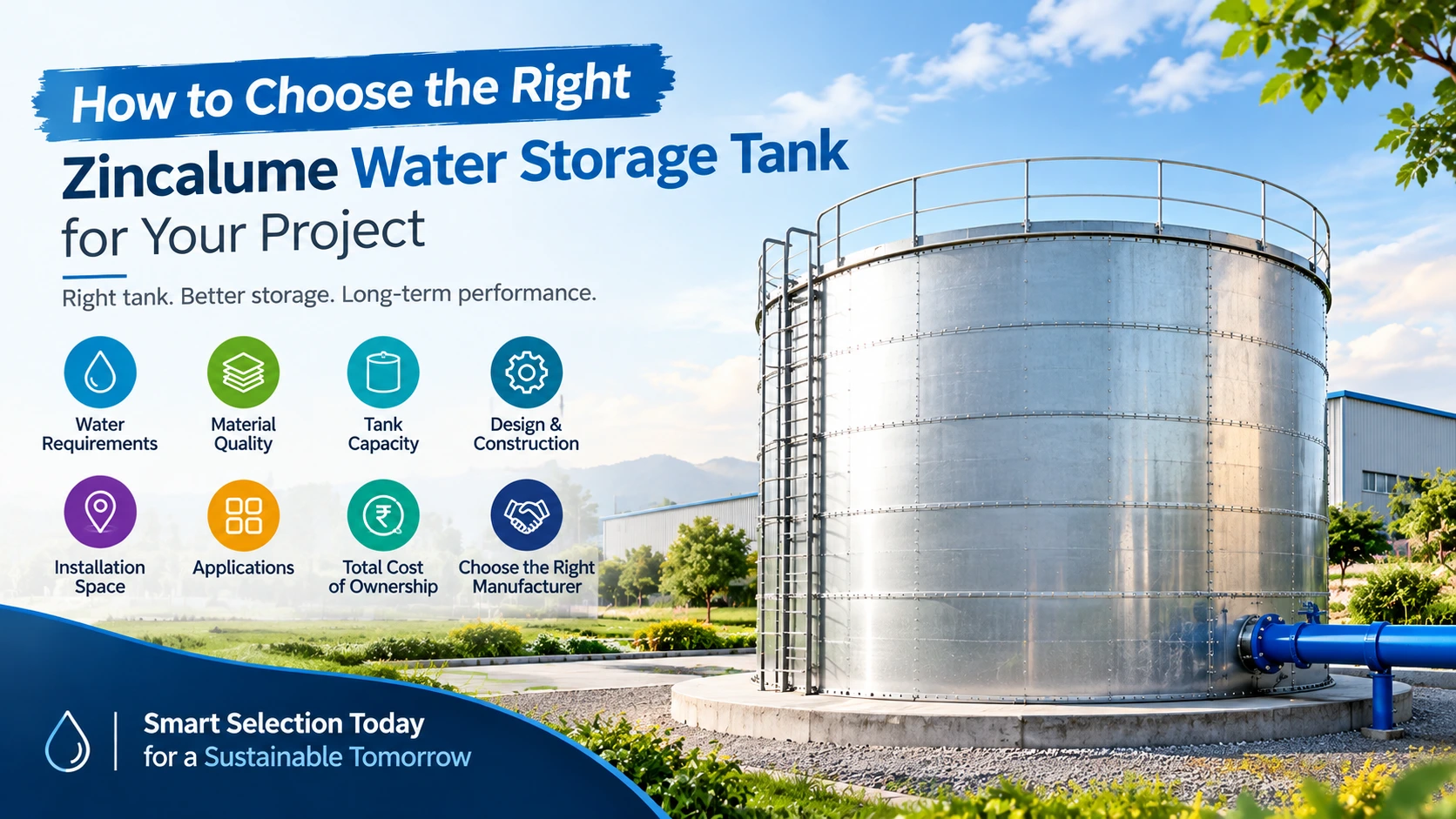
Water storage is an important requirement for industrial plants, commercial buildings, agricultural facilities, and infrastructure projects. Choosing the right storage system helps maintain a reliable water supply, reduce maintenance needs, and support daily operations. A Zincalume Water Storage Tank can be a practical solution for projects that require a well-designed tank with a suitable storage capacity and durable construction.
However, selecting a tank involves more than comparing prices or choosing a particular size. You need to consider water requirements, tank material, installation space, environmental conditions, and long-term maintenance. This guide explains the main factors to consider when choosing the right Zincalume Water Storage Tank for your project.
1. Understand Your Project’s Water Storage Requirements
The first step is to calculate how much water your project needs. Different applications have different storage requirements. A manufacturing facility may need a continuous water supply for production, while a commercial building may require water for cleaning, sanitation, and other daily activities.
Before selecting a tank, consider the following points:
- Daily water consumption of your facility.
- Water supply availability and refill frequency.
- Emergency or backup storage requirements.
- Future expansion plans.
- Available installation space.
Estimating these requirements helps you select a suitable tank capacity without investing in an unnecessarily large storage system.
2. Select the Right Tank Capacity
Tank capacity is one of the most important factors in water storage planning. A tank that is too small may not meet operational demands, while an oversized tank can increase the initial investment and require additional installation space.
For example, a small commercial facility may need a different storage arrangement from a large industrial plant. The correct capacity depends on the number of users, production activities, water consumption patterns, and expected supply interruptions.
When choosing a Zincalume Water Storage Tank, discuss your actual requirements with the supplier. The tank’s dimensions, usable storage volume, overflow arrangement, and future water demand should all be considered before finalising the design.
3. Check the Quality of Zincalume Material
The material used in a storage tank directly affects its performance and service life. Zincalume is a coated steel material that generally combines aluminium and zinc to provide corrosion protection. The coating helps protect the steel substrate against environmental exposure.
However, actual performance depends on the material grade, coating specification, manufacturing quality, installation conditions, and maintenance practices.
Before purchasing a tank, ask about:
- Steel grade and sheet thickness.
- Coating specifications and quality standards.
- Resistance to the expected site environment.
- Compatibility with the intended water use.
- Manufacturer’s warranty and technical documentation.
For drinking water storage, confirm that all water-contact materials and internal linings are suitable for potable water. A coated steel tank should not automatically be assumed safe for drinking water without appropriate confirmation.
4. Evaluate Tank Design and Construction
A well-designed tank should provide structural stability, efficient water storage, and convenient access for inspection and maintenance. The tank’s design must suit the required capacity and the conditions at the installation site.
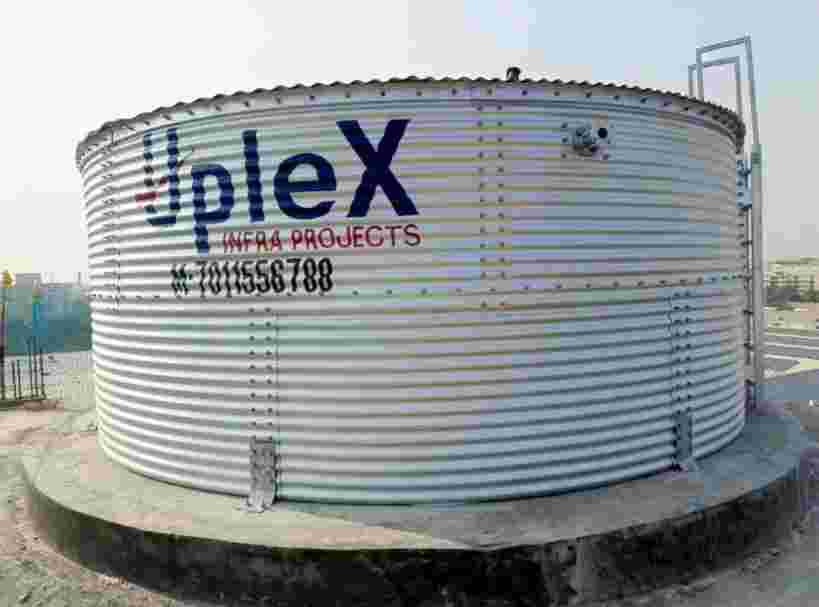
Important construction features may include properly designed wall panels, suitable joints and seals, a stable foundation, access openings, inlet and outlet connections, and an effective overflow arrangement.
For larger tanks, structural design is especially important because stored water creates significant pressure on the tank walls and base. Wind loads, seismic conditions where applicable, and foundation settlement may also need consideration.
Choose a tank designed according to relevant engineering requirements rather than selecting one based only on appearance or price.
5. Consider Installation Space and Site Conditions
Before ordering a tank, inspect the proposed installation location. Measure the available area and check whether the ground or foundation can support the full weight of the tank when filled with water.
Also consider access for transportation, assembly, maintenance, and future repairs. Outdoor installations may require additional planning for weather exposure, drainage, wind conditions, and protection from accidental damage.
A professional site assessment can help identify installation challenges before they become costly problems. The supplier should clarify foundation requirements, installation responsibilities, and the space needed for safe inspection.
6. Match the Tank to Your Application
A Zincalume Water Storage Tank may be considered for different applications, depending on its design and water-contact specifications.
Common applications include:
- Industrial process water storage.
- Commercial building water supply.
- Agricultural and irrigation water storage.
- Rainwater collection systems.
- Fire water storage, where the tank meets applicable requirements.
- Water storage for infrastructure projects.
- Utility and facility water management.
The same tank design may not be appropriate for every application. For example, fire water storage may require specific capacity, outlet arrangements, and compliance with applicable fire protection standards. Industrial water containing chemicals may require a different material or protective lining.
Always match the tank specification to the actual water quality and intended use.
7. Compare Total Cost Instead of Only Purchase Price
The lowest-priced tank is not always the most economical option. A better purchasing decision considers the complete cost of ownership, including the tank, transportation, foundation, installation, fittings, inspection, and maintenance.
Ask suppliers for a clear quotation that explains what is included. Compare material specifications, design details, installation support, warranty conditions, and expected maintenance requirements.
A tank with suitable materials and a properly engineered design may help reduce avoidable repair costs over time. However, its actual service life depends on operating conditions, installation quality, and maintenance.
8. Choose a Reliable Tank Manufacturer and Supplier
The manufacturer plays an important role in helping you select a tank that meets your project’s technical requirements. Look for a supplier who understands your application and can explain material specifications, capacity options, installation needs, and maintenance recommendations.
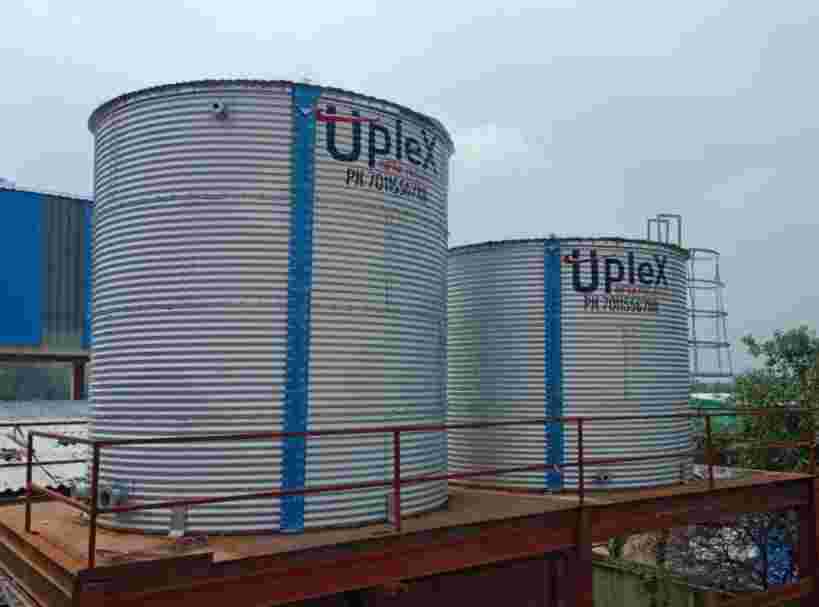
Uplex Infra Project Pvt. Ltd. can be considered when exploring water storage solutions for industrial and infrastructure requirements. Before finalising your purchase, discuss your project specifications and confirm the available tank designs, material details, technical support, and suitability for your intended application.
Clear communication at the planning stage helps reduce confusion during installation and operation.
Conclusion
Choosing the right Zincalume Water Storage Tank requires careful planning, accurate capacity estimation, material evaluation, and proper consideration of site conditions. You should also check structural design, water quality compatibility, installation requirements, and long-term operating costs before making a decision.
By comparing technical specifications instead of focusing only on price, you can identify a storage solution that better matches your project’s needs. Working with a knowledgeable manufacturer or supplier can further support the selection process and help you plan a reliable water storage system for long-term use.