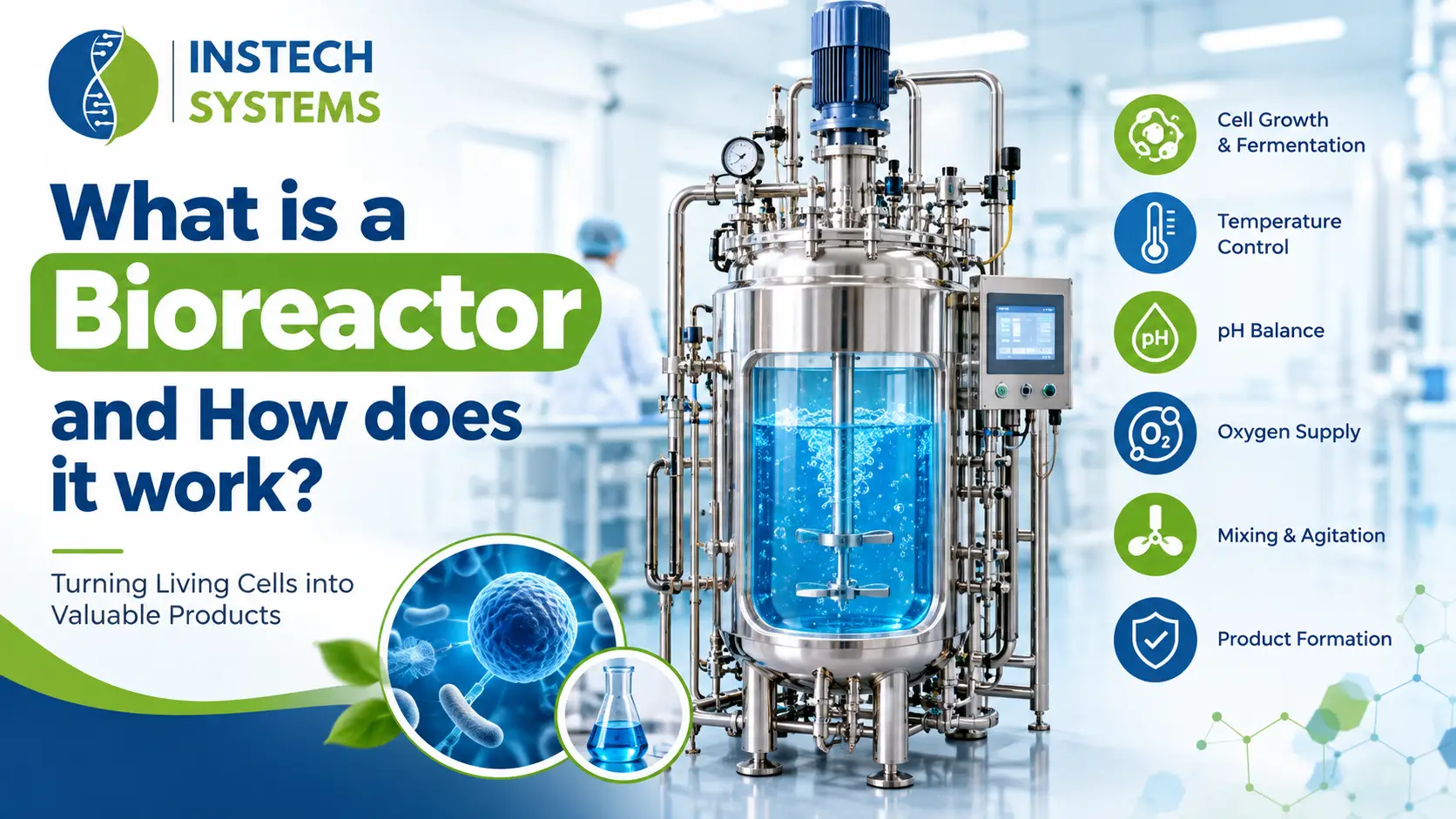
A bioreactor is an important piece of equipment used in pharmaceutical, biotechnology, food processing, and research industries. It provides a controlled environment where living cells, microorganisms, or biological materials can grow and produce useful substances. From manufacturing vaccines and medicines to producing enzymes and other biological products, bioreactors play a major role in modern industrial processes.
In simple words, a bioreactor is a special vessel designed to support biological reactions under controlled conditions. It helps maintain the right temperature, pH, oxygen supply, mixing, and other important factors required for biological growth. With proper control, industries can achieve better product quality, consistent production, and efficient use of raw materials.
What Is a Bioreactor?
A bioreactor is a closed or controlled vessel in which biological processes take place using microorganisms, animal cells, plant cells, or enzymes. It creates suitable conditions for these biological materials to grow, multiply, or produce a desired product.
Unlike ordinary industrial tanks, a bioreactor is designed to control important process conditions. These include temperature, pH, dissolved oxygen, agitation, nutrient supply, and pressure, depending on the application.
For example, in pharmaceutical manufacturing, a bioreactor may be used to grow specific cells that produce therapeutic proteins or other biological substances. In biotechnology, it can support microbial growth for enzyme production, fermentation, and other industrial processes.
A bioreactor is not simply a container for growing cells. It is a complete process system that combines biological activity, mechanical mixing, monitoring instruments, and process control.
How Does a Bioreactor Work?
A bioreactor works by providing the right conditions for biological materials to carry out a specific reaction. The process begins with preparing the vessel and adding the required biological material, nutrients, and other process ingredients.
The system then controls different operating conditions so that the biological reaction can continue efficiently.
1. Preparation and Sterilization
Before starting the process, the bioreactor vessel and product-contact components are cleaned and sterilized according to the process requirements.
This step helps reduce the risk of contamination from unwanted microorganisms. In pharmaceutical applications, maintaining suitable sterile conditions is especially important because contamination can affect product quality and safety.
The vessel may be sterilized using steam, such as through a suitable SIP (Sterilization-in-Place) system, depending on its design.
2. Adding the Culture and Nutrients
After preparation, the required biological material is introduced into the vessel. This may include bacteria, yeast, animal cells, plant cells, or another suitable biological culture.
A nutrient medium is also added to provide the materials needed for growth and biological activity.
The medium may contain water, sugars, minerals, amino acids, salts, and other nutrients depending on the organism or cells being used.
3. Maintaining Temperature and pH
Biological materials need suitable environmental conditions to grow and perform their intended function.
A temperature control system helps maintain the required operating temperature. Heating or cooling may be provided through a jacket, internal coil, or another suitable heat-transfer arrangement.
The pH level is also monitored and controlled because changes in acidity or alkalinity can affect cell growth and product formation.
Sensors and control systems help maintain these conditions within the required operating range.
4. Mixing and Oxygen Supply
Mixing is an important part of bioreactor operation. An agitator or another mixing arrangement helps distribute nutrients, temperature, and biological materials throughout the vessel.
For aerobic processes, oxygen must be supplied to support the growth and activity of cells or microorganisms.
Air or oxygen may be introduced through a sparger, while the agitation system helps transfer oxygen into the liquid.
The required mixing speed and oxygen supply depend on the organism, process, and sensitivity of the biological material.
5. Monitoring and Controlling the Process
Modern bioreactors use sensors and automation systems to monitor important process conditions.
These may include:
-
Temperature and pH.
-
Dissolved oxygen (DO).
-
Agitation speed.
-
Pressure and airflow.
-
Foam formation and liquid level, where required.
The control system uses this information to help maintain the desired operating conditions. Operators can monitor the process and make adjustments when needed.
6. Harvesting the Final Product
Once the biological process reaches the required stage, the product is collected.
Depending on the application, the product may be present in the liquid medium, inside the cells, or associated with the biological material.
The next steps may include filtration, centrifugation, cell separation, purification, concentration, or other downstream processing operations.
For pharmaceutical products, additional purification and quality testing are generally required before the material can be used in further manufacturing or product formulation.
Main Components of a Bioreactor
A bioreactor consists of several components that work together to maintain the required biological and operating conditions.
|
Component |
Function |
|---|---|
|
Vessel |
Provides a controlled space for the biological process. |
|
Agitator and impeller |
Mix the contents and help distribute nutrients and oxygen. |
|
Sparger |
Introduces air or gas into the liquid in applicable systems. |
|
Temperature control system |
Maintains the required process temperature. |
|
pH sensor |
Measures the acidity or alkalinity of the medium. |
|
Dissolved oxygen sensor |
Measures oxygen available in the liquid. |
|
Control panel |
Helps monitor and control process parameters. |
|
Sampling port |
Allows samples to be collected for testing. |
|
Exhaust filter |
Helps control contamination risks while allowing gases to leave the vessel. |
The exact components depend on the bioreactor type, working volume, process requirements, and level of automation.
Types of Bioreactors
Different biological processes require different equipment designs. The selection of a bioreactor depends on the type of cells or microorganisms, oxygen requirements, production volume, and sensitivity of the biological material.
Common bioreactor types used in pharmaceutical and biotechnology industries
1. Stirred Tank Bioreactor
A stirred tank bioreactor is one of the most widely used designs in industrial biotechnology and pharmaceutical processing.

It uses a mechanical agitator to mix the liquid and biological materials inside the vessel. The mixing system helps distribute nutrients and supports oxygen transfer in aerobic processes.
Stirred tank bioreactors are used for microbial fermentation, cell culture, enzyme production, and various pharmaceutical manufacturing processes.
Key features:
-
Efficient mixing and process control.
-
Suitable for different working volumes.
-
Can be designed with temperature and pH control.
-
Available in laboratory, pilot, and production-scale systems.
2. Airlift Bioreactor

An airlift bioreactor uses air or gas flow to circulate the liquid inside the vessel. Unlike a conventional stirred tank, it generally does not require a mechanical agitator for circulation.
Gas movement creates differences in liquid density, which help move the culture through different sections of the vessel.
It is useful for certain cell cultures and biological processes where lower mechanical shear and controlled circulation are important.
3. Bubble Column Bioreactor

A bubble column bioreactor is a simple vessel in which gas is introduced from the bottom. The rising bubbles help mix the liquid and provide gas transfer.
It has a relatively simple construction and fewer moving parts compared with mechanically stirred systems.
Common applications include fermentation, wastewater treatment research, and selected gas-liquid biological processes.
4. Packed Bed Bioreactor
A packed bed bioreactor contains a support material on which cells or enzymes can attach and remain in place.
The liquid containing nutrients flows through the packed material, allowing the biological reaction to take place.
It is used in certain enzyme processes, immobilized cell systems, and specialized biotechnology applications.
5. Single-Use Bioreactor

A single-use bioreactor uses a disposable product-contact bag instead of a permanently reusable product-contact vessel.
After a batch, the bag is replaced according to the manufacturer’s procedure. This can reduce the need for cleaning and sterilizing the product-contact vessel between batches.
Single-use systems are widely used in selected biopharmaceutical processes, especially where flexible production and reduced cleaning requirements are important.
The system still requires suitable process controls, validated procedures, and appropriate quality management.
Important Operating Parameters of a Bioreactor
A bioreactor must maintain suitable operating conditions to support biological growth and product formation. Even small changes in certain parameters can affect the process.
|
Parameter |
Why It Is Important |
|---|---|
|
Temperature |
Influences cell growth, enzyme activity, and biological reactions. |
|
pH |
Affects cell health, nutrient availability, and product formation. |
|
Dissolved oxygen |
Supports aerobic cell growth and metabolism. |
|
Agitation speed |
Influences mixing, oxygen transfer, and shear stress. |
|
Nutrient supply |
Provides the materials required for growth and production. |
|
Foam control |
Prevents excessive foam that may affect operation or filtration. |
|
Pressure |
Supports safe operation and required gas-transfer conditions. |
The correct operating values are not the same for every process. For example, bacterial fermentation and mammalian cell culture can require very different mixing speeds, oxygen levels, and nutrient conditions.
For this reason, process parameters should be selected according to the biological material and the product being manufactured.
Bioreactor vs Fermenter: What Is the Difference?
The terms bioreactor and fermenter are often used in biotechnology and pharmaceutical manufacturing. Although they are closely related, their use can differ depending on the process and industry.
|
Basis |
Bioreactor |
Fermenter |
|---|---|---|
|
Meaning |
A vessel used for controlled biological reactions. |
A vessel mainly associated with fermentation processes. |
|
Biological materials |
May use microbial, animal, or plant cells and enzymes. |
Commonly uses microorganisms such as bacteria and yeast. |
|
Applications |
Cell culture, biological products, fermentation, and other processes. |
Microbial fermentation and related production processes. |
|
Oxygen requirements |
May be aerobic or anaerobic, depending on the process. |
May also be aerobic or anaerobic, depending on the fermentation. |
|
Design |
Selected according to the biological process. |
Designed around the requirements of the fermentation process. |
In practical use, a fermenter is often considered a type of bioreactor. The terms may also be used interchangeably by manufacturers, depending on the equipment and application.
Bioreactor Manufacturing and Pharmaceutical Equipment Solutions
Choosing suitable equipment is an important part of establishing a controlled pharmaceutical or biotechnology process. The vessel, mixing arrangement, instrumentation, material of construction, and sterilization system should all be selected according to the intended application.
Instech Pharma focuses on pharmaceutical equipment solutions designed around process requirements, equipment functionality, and manufacturing needs. When evaluating a bioreactor, buyers should consider the required working capacity, product-contact materials, temperature and pH control, automation features, and applicable quality requirements.
A suitable system should support the biological process while allowing operators to monitor and manage critical operating conditions.
Before finalizing any equipment, it is important to discuss the process requirements, production capacity, installation conditions, and technical specifications with the equipment supplier.
Frequently Asked Questions (FAQs)
1. What is a bioreactor in simple words?
A bioreactor is a controlled vessel where living cells, microorganisms, or biological materials carry out a biological process. It provides suitable conditions for growth and the production of useful substances.
2. What is the main purpose of a bioreactor?
The main purpose of a bioreactor is to provide controlled conditions for biological reactions. It helps maintain temperature, pH, oxygen supply, mixing, and nutrients according to the process requirements.
3. How does a bioreactor work?
A bioreactor works by introducing biological materials and nutrients into a prepared vessel. It controls environmental conditions, supports biological activity, monitors the process, and allows the required product to be harvested after the reaction.
4. What are the main types of bioreactors?
Common types include stirred tank bioreactors, airlift bioreactors, bubble column bioreactors, packed bed bioreactors, and single-use bioreactors.
5. What is the difference between a bioreactor and a fermenter?
A bioreactor is a broad term for equipment used in controlled biological processes. A fermenter is generally associated with fermentation, especially processes involving microorganisms. A fermenter is commonly considered a type of bioreactor.
6. Why is pH control important in a bioreactor?
pH affects cell growth, enzyme activity, nutrient availability, and product formation. Maintaining the required pH helps support stable biological activity and consistent process performance.
7. Which industries use bioreactors?
Bioreactors are used in pharmaceutical manufacturing, biotechnology, food processing, wastewater treatment, agriculture, and environmental biotechnology.
8. What material is commonly used to manufacture pharmaceutical bioreactors?
Stainless steel, particularly SS 316L for suitable product-contact applications, is commonly used in pharmaceutical bioreactor construction. Single-use systems with disposable product-contact bags are also used for selected applications.
9. What is the role of oxygen in a bioreactor?
In aerobic processes, oxygen supports cellular respiration, microbial growth, and biological product formation. Oxygen is often supplied through a sparger and transferred into the liquid with the help of mixing.
10. What should be checked before purchasing a bioreactor?
Important factors include biological material, working volume, material of construction, sterilization requirements, mixing and oxygen transfer, automation, process monitoring, and technical support.
Conclusion
A bioreactor is an essential part of modern pharmaceutical and biotechnology manufacturing. It creates a controlled environment where biological materials can grow, carry out reactions, and produce useful substances.
Understanding how a bioreactor works, its different types, operating parameters, and industrial applications helps businesses select equipment according to their production needs.
For pharmaceutical applications, the right combination of vessel design, process control, contamination prevention, and quality systems is important for reliable manufacturing. With suitable equipment and proper process management, bioreactors support the development and production of a wide range of biological products.
Instech Pharma understands the importance of process requirements and suitable pharmaceutical equipment when planning biological manufacturing operations.