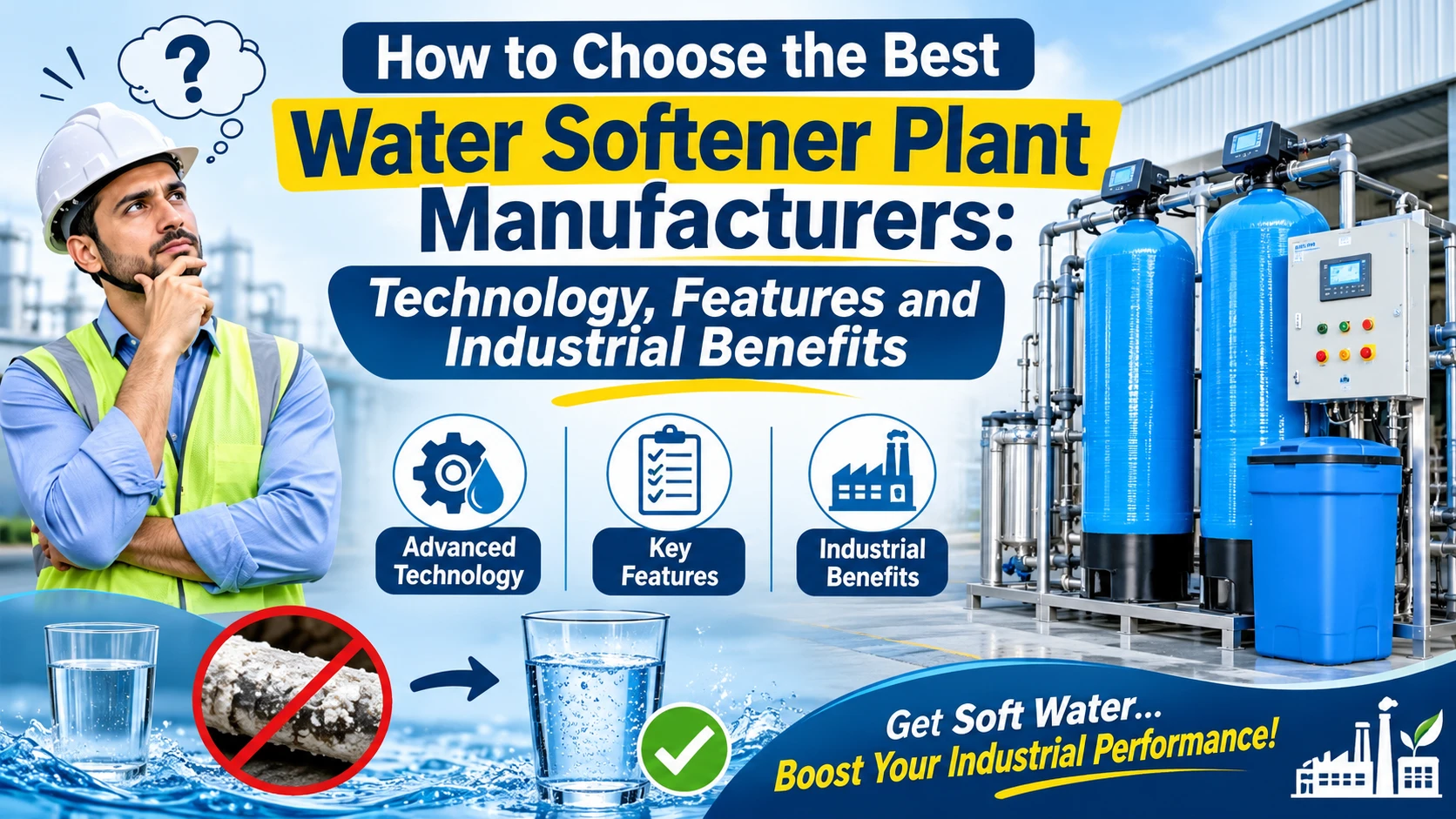
Choosing the right Water Softener Plant Manufacturers is an important decision because the quality of the equipment directly affects water treatment performance. A well-designed plant helps reduce water hardness, protect machinery and maintain smooth industrial operations. However, before selecting a manufacturer, businesses should understand the treatment technology, plant capacity, important features and long-term operating requirements.
Water quality plays an important role in the performance, efficiency and life of industrial equipment. Water containing high levels of calcium and magnesium can create hardness problems that affect pipelines, boilers, cooling towers, heat exchangers and other industrial systems. Hard water also causes scale formation, reduces heating efficiency and increases maintenance requirements. This is why installing a reliable water softener plant is essential for industries that require consistent and properly treated water.
1. Understand Your Water Quality Requirements
The first step in selecting a suitable water softener plant is understanding the quality of your raw water. Water hardness varies depending on its source, such as borewell water, groundwater, municipal supply or surface water.
A water test helps identify the concentration of calcium and magnesium salts responsible for hardness. It also provides information about other water parameters that may affect treatment performance.
Before purchasing a plant, consider:
Total hardness of raw water.
Daily water consumption.
Required treated water quality.
Iron and other dissolved impurities.
Water source and supply conditions.
Industrial application requirements.
These details help manufacturers recommend a suitable system instead of offering equipment based only on general capacity.
2. Check the Water Softening Technology
Technology is one of the most important factors when comparing water softener plant manufacturers. Most conventional industrial water softeners work on the ion exchange principle.
In this process, hard water passes through a specially designed resin bed. The resin captures calcium and magnesium ions and releases sodium ions in their place. As a result, the hardness of water is significantly reduced.
The system generally includes:
Resin Vessel: It contains ion exchange resin that removes hardness-causing minerals.
Ion Exchange Resin: It performs the actual softening process by exchanging calcium and magnesium ions.
Control Valve: It controls water flow, regeneration cycles and different operating functions.
Brine Tank: It stores salt solution used to regenerate the resin.
Pipelines and Fittings: These components ensure proper water movement throughout the system.
A good manufacturer should understand these components and design the plant according to the actual water treatment requirements.
3. Select the Right Plant Capacity
Plant capacity directly affects the availability of softened water. If the system is undersized, it may not meet daily demand. On the other hand, an unnecessarily oversized plant can increase installation and operating costs.
Water softener plants are available in different capacities for residential, commercial and industrial applications.
Before selecting the capacity, evaluate:
Daily water requirement in litres.
Peak water consumption.
Required flow rate.
Raw water hardness level.
Operating hours per day.
Regeneration frequency.
Experienced Water Softener Plant Manufacturers consider these factors to recommend a system that can deliver consistent performance during regular operations.
4. Important Features of a Quality Water Softener Plant
A reliable water softener plant should be designed for efficient operation, easy maintenance and long-term use. Businesses should check the following features before finalising a system.
Automatic Control System: Helps manage operating and regeneration cycles with minimal manual intervention.
High-Quality Resin: Supports effective removal of calcium and magnesium ions.
Durable Pressure Vessel: Provides reliable performance under specified operating conditions.
Efficient Regeneration: Helps restore the resin’s softening capacity.
Corrosion-Resistant Components: Improve equipment durability.
Proper Flow Control: Maintains the required water supply.
Easy Maintenance: Allows convenient inspection and servicing.
Brine Management: Supports proper salt storage and regeneration.
Reliable Valves: Help maintain smooth system operation.
Compact Design: Makes installation easier where space is limited.
These features help businesses select equipment that matches their operational needs.
5. Explore Industrial Applications of Water Softener Plants
Water softening is important in industries where hard water can affect production quality, equipment efficiency and maintenance costs. A properly selected system helps protect industrial infrastructure and maintain consistent water supply.
Some major applications include:
Textile Industry: Helps reduce hardness-related problems in washing, dyeing and processing operations.
Pharmaceutical Industry: Supports water treatment requirements as part of a properly designed purification system.
Food and Beverage Industry: Helps control hardness in water used for different processing operations.
Boiler Systems: Reduces scale formation caused by calcium and magnesium hardness.
Hotels and Hospitals: Supports softened water requirements for laundry, cleaning and utility applications.
Cooling Towers: Helps manage hardness-related scaling in circulating water systems.
Automobile Industry: Supports water requirements for washing and other industrial processes.
Chemical Industry: Provides softened water for applications where hardness control is necessary.
The correct plant configuration depends on the specific water quality and application.
6. Compare Manufacturing Quality and Customisation Options
Not every industrial requirement is the same. Different industries have different water consumption levels, operating conditions and treatment expectations. Therefore, choosing a manufacturer that can provide application-based solutions is important.
Check whether the manufacturer offers customised plant capacities, suitable resin selection, automatic or manual control options, appropriate vessel materials and installation support.
Yash Water Purifier Pvt. Ltd. is a name businesses can consider when exploring water treatment solutions. While selecting a system, customers should evaluate the equipment design, component quality, technical specifications and suitability for their particular application.
A properly designed plant should offer reliable performance without unnecessary complexity.
7. Consider Maintenance and Operating Costs
The purchase price is not the only factor that determines the overall cost of a water softener plant. Businesses should also understand the recurring expenses associated with its operation.
Important cost factors include:
Salt consumption during regeneration.
Water used for regeneration and rinsing.
Electricity consumption, where applicable.
Resin cleaning or replacement.
Control valve maintenance.
Periodic servicing and inspection.
Regular maintenance helps maintain treatment efficiency and prevents unexpected equipment problems. Operators should monitor treated water hardness, salt levels, regeneration performance and system pressure.
8. Why Choosing the Right Manufacturer Matters
A reliable manufacturer does more than supply a water softener plant. The manufacturer should understand the customer’s water requirements and recommend equipment that suits the intended application.
Before making a final decision, check the manufacturer’s technical knowledge, product specifications, component quality, customisation capabilities and after-sales support.
It is also useful to ask for installation guidelines, operating instructions and maintenance recommendations. These details help businesses operate their systems more effectively.
Conclusion
Selecting the right water softening system requires careful consideration of water quality, treatment technology, plant capacity, equipment features and long-term maintenance requirements. A suitable plant helps reduce water hardness, minimise scale formation, protect industrial machinery and improve operational efficiency.
When comparing Water Softener Plant Manufacturers, businesses should focus on technical expertise, manufacturing quality, system performance and application-specific solutions rather than considering price alone. With the right equipment and proper maintenance, industries can achieve a more reliable and efficient water treatment process.
Yash Water Purifier Pvt. Ltd. can be considered while exploring water treatment solutions for different requirements. Choosing a properly designed water softener plant is an important step towards better water quality and smoother industrial operations.