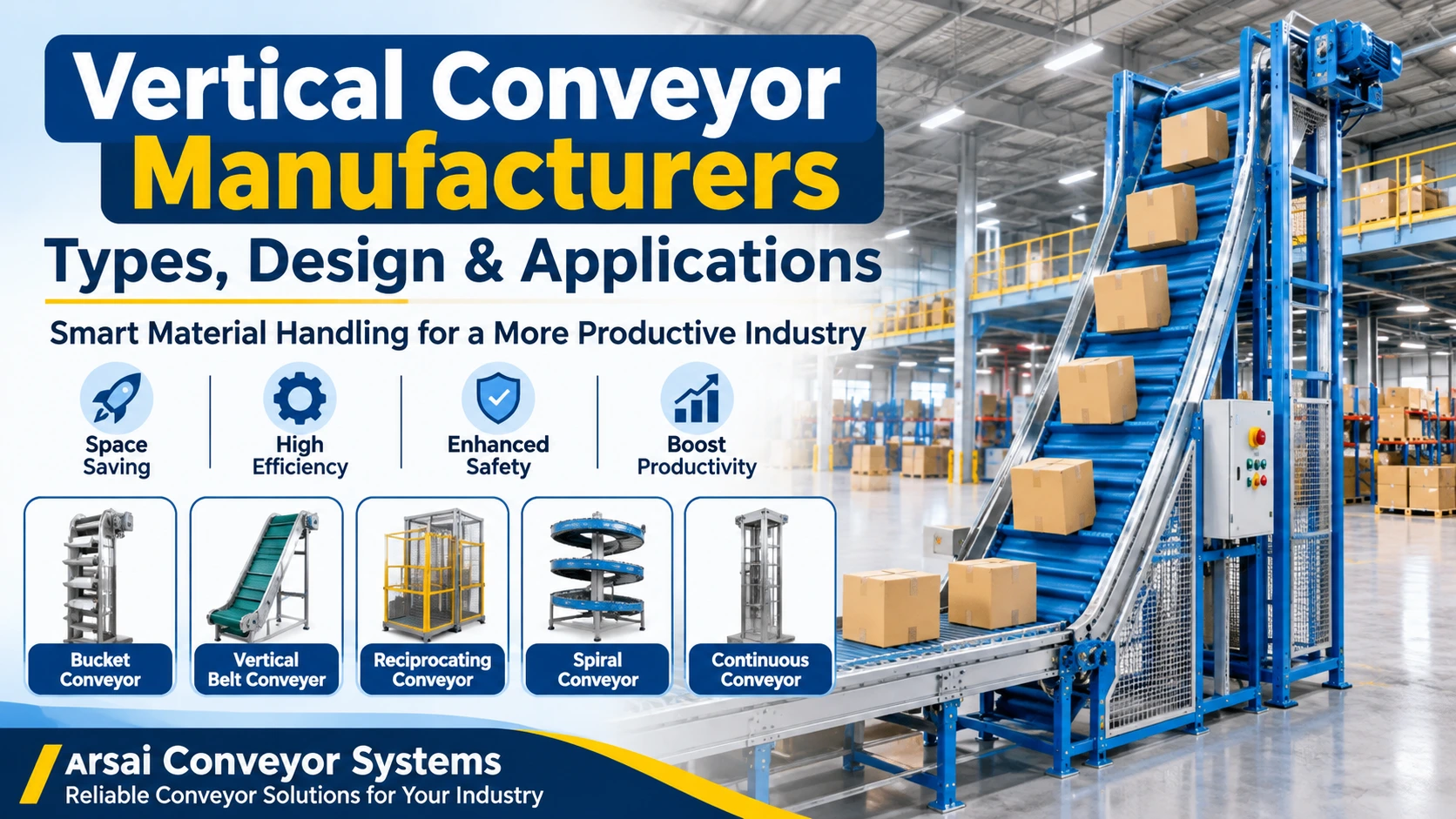
Vertical Conveyor Manufacturers play an important role in providing material-handling solutions for industries that need to move products between different floor levels. In modern manufacturing and warehousing facilities, managing materials efficiently is essential for maintaining smooth operations and reducing unnecessary manual work. Vertical conveyor systems are specially designed to transport goods upward or downward while using less floor space than many traditional material-handling arrangements.
These systems are widely used in manufacturing plants, warehouses, packaging units, food processing facilities, and distribution centres. They help businesses connect different production levels, storage areas, and processing sections. Arsai Conveyor Systems is associated with conveyor solutions that support organized material movement and help industries improve their material-handling operations.
What Is a Vertical Conveyor System?
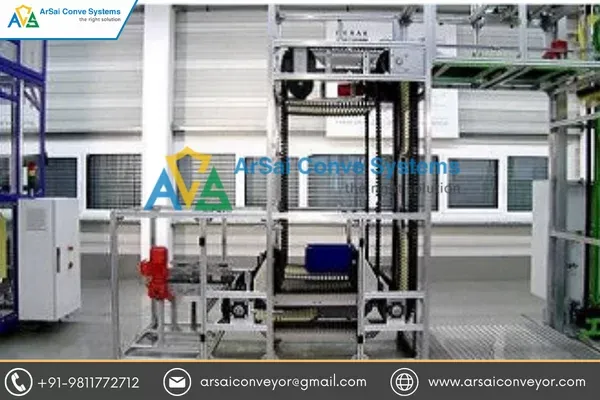
A vertical conveyor system is a mechanical material-handling solution designed to move products, goods, and industrial materials between two or more different heights. Unlike horizontal conveyors, which transport materials across a floor, vertical conveyors are used when products need to move between different levels of a building or production facility.
These systems can handle various materials, including cartons, boxes, containers, industrial components, packaged products, and other suitable loads. Depending on the application, vertical conveyors may operate through belts, chains, platforms, or specially designed lifting mechanisms.
For example, in a multi-floor warehouse, a vertical conveyor can transfer cartons from the ground floor to an upper storage level. This reduces manual transportation and supports a more organized workflow.
Types of Vertical Conveyor Systems
Different industries require different vertical conveyor designs according to product weight, dimensions, transportation height, and operating conditions. Some commonly used types include:
1. Continuous Vertical Conveyor
Continuous vertical conveyors are designed to move products continuously between different levels. They are suitable for applications where materials need to be transferred regularly without frequent interruptions.
These systems are commonly used in manufacturing and distribution facilities where consistent product movement is important.
2. Reciprocating Vertical Conveyor
A reciprocating vertical conveyor uses a lifting platform or carrier that moves up and down between selected levels. It is suitable for transferring individual loads or batches of products between floors.
This type of conveyor is commonly considered for warehouses, production facilities, and packaging units.
3. Bucket Vertical Conveyor
Bucket conveyors use attached buckets to carry loose or bulk materials vertically. They are commonly used in industries handling grains, powders, granules, and other bulk materials.
The bucket design depends on the material characteristics and required transportation capacity.
4. Vertical Belt Conveyor
Vertical belt conveyors use specially designed belts and supporting arrangements to move suitable products between different heights. Depending on their design, they can handle packaged goods, components, and other industrial materials.
5. Spiral Vertical Conveyor
Spiral conveyors use a curved or spiral-shaped transportation path to move products between different elevations. They can provide continuous movement while making efficient use of available floor space.
These systems are useful in packaging, food processing, and distribution applications.
Important Components of a Vertical Conveyor System
A vertical conveyor consists of different mechanical and electrical components that work together to ensure safe and reliable material movement.
- Conveyor Frame: Provides structural support to the complete system.
- Drive Motor: Supplies the power needed for conveyor operation.
- Gearbox: Helps provide suitable speed and torque.
- Belt or Chain: Supports the movement of products or lifting platforms.
- Lifting Platform: Carries products between different levels in platform-based systems.
- Rollers and Guides: Help maintain proper movement and alignment.
- Control Panel: Manages the operating functions of the conveyor.
- Sensors: Detect product position and support automated operations.
- Safety Devices: Include emergency stops, guards, and other application-specific safety arrangements.
The selection of components depends on load capacity, lifting height, operating speed, and the type of material being transported.
Working Principle of Vertical Conveyor Systems
The working principle of a vertical conveyor depends on its design and transportation mechanism. Generally, an electric motor drives the conveyor through a gearbox, chain, belt, or other mechanical arrangement.
In a continuous vertical conveyor, products are carried through a moving transportation mechanism that follows a vertical path. In a reciprocating system, a platform moves upward or downward to transfer products between selected levels.
Sensors and control systems can be integrated to monitor product movement and manage loading and unloading operations. Depending on the design, the conveyor can operate automatically or through operator-controlled functions.
A properly designed system ensures that materials reach the required height safely and in an organized manner.
How to Choose the Right Vertical Conveyor Manufacturers
Selecting suitable Vertical Conveyor Manufacturers is important because the conveyor system must match the actual requirements of the facility. Before making a decision, consider the following factors:
1. Understand Your Material Requirements
Identify the type of products that need to be transported. Consider their weight, dimensions, shape, packaging, and handling requirements.
2. Check Load Capacity
The conveyor should be designed according to the maximum load expected during normal operation. Always consider the weight of individual products and the total load carried by the system.
3. Consider Lifting Height
Determine the distance between the loading and unloading points. The required lifting height directly affects the conveyor structure and mechanical design.
4. Evaluate Production Capacity
Check how many products need to be transferred per hour. The conveyor speed and operating cycle should support the required production output.
5. Check Safety Features
Look for suitable guarding, emergency stop arrangements, overload protection, sensors, and other safety features according to the application.
6. Consider Available Space
The conveyor layout should fit the available installation area without creating unnecessary obstacles for workers or other equipment.
7. Understand Maintenance Requirements
Choose a design that allows easy inspection, servicing, and replacement of important components. Regular maintenance helps reduce unexpected breakdowns.
Benefits of Installing Vertical Conveyor Systems
Vertical conveyor systems offer several advantages to manufacturing and material-handling facilities.
- Space Saving: Uses vertical space to reduce the need for long horizontal transportation routes.
- Efficient Material Movement: Transfers products between different floor levels.
- Reduced Manual Handling: Minimizes the need for workers to carry materials manually.
- Improved Workflow: Connects different production and storage levels.
- Better Productivity: Supports regular and organized material transportation.
- Flexible Applications: Can be designed for different product types and industrial requirements.
- Automation Compatibility: Can be integrated with sensors and automated control systems.
- Organized Operations: Helps maintain a structured material-handling process.
- Reduced Handling Delays: Makes product transfer between levels more convenient.
- Scalable Design: Can be planned according to present and future operational requirements.
Industrial Applications of Vertical Conveyor Systems
Vertical conveyors are used in several industries where products or materials need to be transported between different heights.
Manufacturing Industry
Used to transfer components, finished products, and production materials between different manufacturing levels.
Warehousing and Logistics
Helps move cartons, packages, and stored goods between multiple floors and storage sections.
Packaging Industry
Transfers packed products between filling, sealing, inspection, and dispatch areas.
Food Processing Industry
Used for transporting suitable packaged food products and bulk materials between processing levels.
Pharmaceutical Industry
Supports the movement of packaging materials, containers, and products within suitable production facilities.
Automobile Industry
Helps transfer automotive components and industrial parts between different workstations.
E-commerce and Distribution Centres
Supports product movement between sorting, storage, and dispatch sections.
Maintenance Tips for Vertical Conveyor Systems
Regular maintenance is important for maintaining conveyor performance and improving equipment life. Some useful maintenance practices include:
- Inspect belts, chains, and lifting platforms regularly.
- Check motors, gearboxes, and drive mechanisms.
- Maintain proper belt tension and mechanical alignment.
- Lubricate moving components as recommended by the manufacturer.
- Test sensors, emergency stops, and safety devices.
- Remove dust, dirt, and material accumulation.
- Check supporting structures and fasteners for looseness.
- Replace damaged or worn components on time.
A planned inspection schedule helps identify problems early and reduces the risk of unexpected equipment downtime.
Why Choose Arsai Conveyor Systems?
Choosing the right conveyor solution is important for improving material movement and maintaining an organized industrial environment. Every facility has different requirements based on product weight, transportation height, available space, production capacity, and operating conditions.
Arsai Conveyor Systems is a relevant name for businesses exploring conveyor solutions for industrial material handling. When selecting a vertical conveyor, it is important to evaluate the system design, load-handling requirements, safety arrangements, installation conditions, and maintenance support.
A suitable conveyor arrangement can help industries connect multiple working levels, reduce unnecessary manual transportation, and improve the overall flow of materials.
Conclusion
Vertical conveyor systems have become an important part of modern industrial material handling. They provide an effective way to transfer products between different floor levels while making better use of available space. From manufacturing plants and warehouses to packaging and distribution facilities, these systems support organized and efficient operations.
Before selecting Vertical Conveyor Manufacturers, businesses should carefully evaluate conveyor types, load capacity, lifting height, operating speed, safety features, and maintenance requirements. The right system design can improve workflow, reduce manual handling, and support long-term industrial productivity.
Frequently Asked Questions (FAQs)
1. What is a vertical conveyor used for?
A vertical conveyor is used to move products, goods, and materials between different floor levels in industrial and commercial facilities.
2. What are the main types of vertical conveyors?
The main types include continuous vertical conveyors, reciprocating vertical conveyors, bucket conveyors, vertical belt conveyors, and spiral conveyors.
3. Which industries use vertical conveyor systems?
Manufacturing, warehousing, packaging, food processing, pharmaceuticals, automotive, and logistics industries commonly use vertical conveyors.
4. Can vertical conveyors handle heavy materials?
Yes, suitable heavy-duty vertical conveyor systems can be designed for industrial loads. Their capacity depends on the mechanical design and application requirements.
5. Are vertical conveyor systems suitable for warehouses?
Yes. They help transfer cartons, packages, and other goods between different storage levels while saving floor space.
6. What factors should be considered before purchasing a vertical conveyor?
Important factors include product dimensions, load capacity, lifting height, conveyor speed, available space, safety features, and maintenance requirements.