
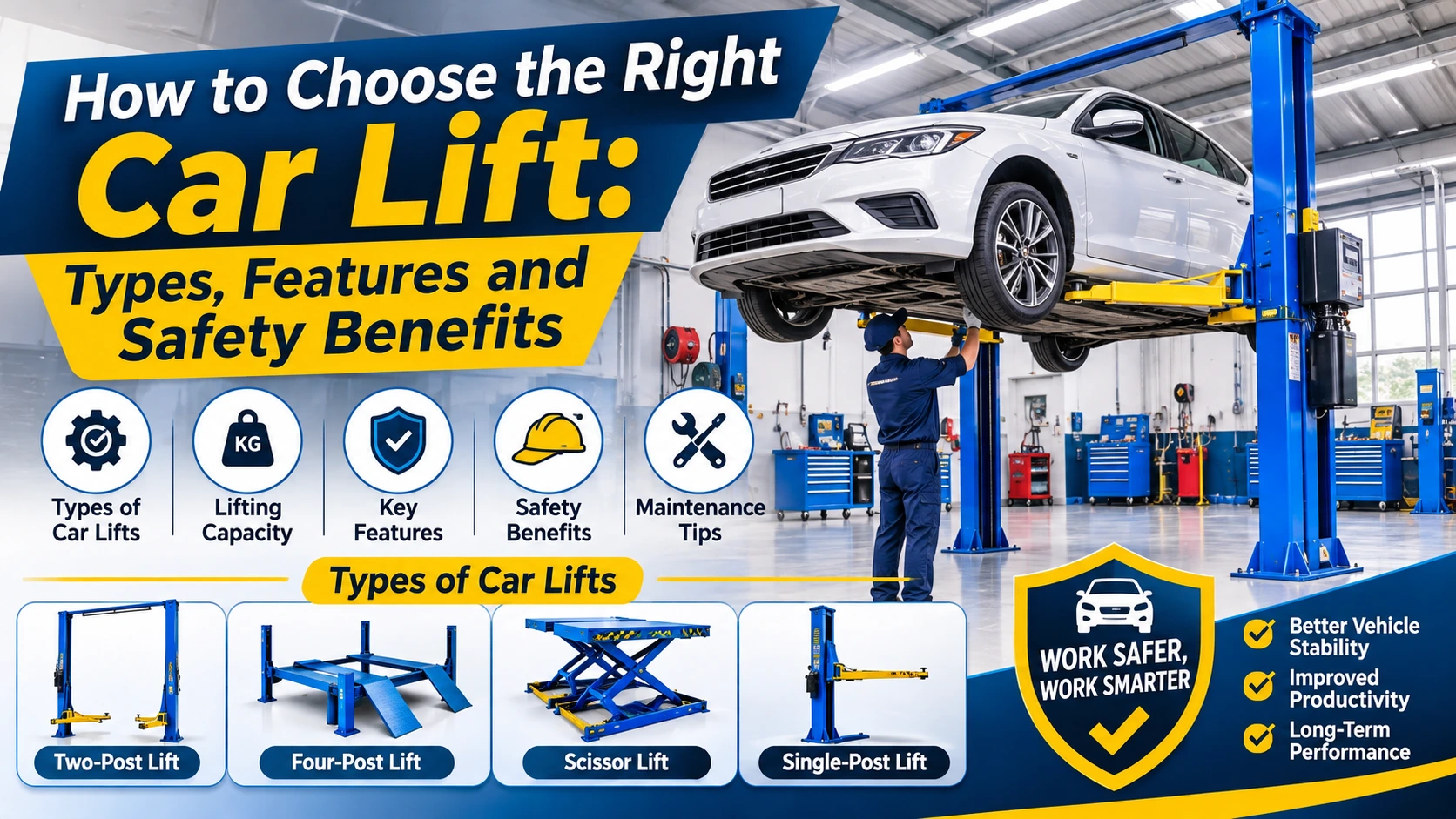
Choosing the right car lift is an important decision for automobile workshops, service centres, garages, and vehicle maintenance facilities. A suitable car lift makes vehicle handling easier, improves workshop productivity, and provides safe access to different parts of a vehicle. Whether you operate a small garage or a large automobile service centre, selecting the correct lifting equipment can make daily operations more efficient.
Today, different types of car lifts are available with various lifting capacities, designs, operating systems, and safety features. Understanding these options helps buyers choose equipment according to their workspace, vehicle requirements, and budget. Reliable companies like DS Enterprises focus on providing lifting solutions that support practical vehicle handling and workshop requirements.
What Is a Car Lift?
A car lift is mechanical or hydraulic equipment designed to raise vehicles from the ground to a suitable working height. It allows mechanics and technicians to inspect, repair, clean, and maintain vehicles without depending entirely on floor-level working methods.
Car lifts are commonly used in automobile workshops, vehicle service centres, tyre shops, car dealerships, and maintenance facilities. Depending on their design, they can lift small passenger cars, SUVs, and other compatible vehicles.
Modern lifting systems are designed to improve working convenience while maintaining vehicle stability during lifting and lowering operations.
Different Types of Car Lifts
Before selecting a car lift, it is important to understand the available designs. Each type has different applications and installation requirements.
1. Two-Post Car Lift
A two-post car lift is widely used in automobile repair workshops. It generally consists of two vertical columns with adjustable lifting arms that support the vehicle at suitable lifting points.
Key features:
Suitable for general vehicle maintenance.
Provides good access to the vehicle’s underside.
Requires comparatively less floor space.
Available in different lifting capacities.
Useful for repair, inspection, and servicing work.
2. Four-Post Car Lift
A four-post car lift uses four vertical columns and two supporting runways. Vehicles are driven onto the platforms before being raised.
This design offers stable vehicle support and is commonly used for wheel alignment, vehicle storage, inspection, and maintenance applications.
Key features:
Stable four-point support structure.
Suitable for different passenger vehicles.
Useful for vehicle parking and storage.
Available with additional alignment features.
Designed for regular workshop operations.
3. Scissor Car Lift
A scissor car lift uses a cross-linked mechanical structure that opens and closes to raise or lower a vehicle. It can be installed above the floor or recessed into the ground, depending on the design.
It is useful for workshops where space management and convenient vehicle positioning are important.
Key features:
Compact lifting arrangement.
Suitable for selected maintenance tasks.
Available in different platform sizes.
Can be used in small and medium-sized workshops.
Offers convenient vehicle lifting.
4. Single-Post Car Lift
A single-post car lift uses one main supporting column to raise compatible vehicles. It is often selected for specific workshop layouts and applications where a compact lifting arrangement is required.
The lifting capacity, support arrangement, and vehicle compatibility should be checked carefully before installation.
Important Features to Consider Before Buying a Car Lift
Not every car lift is suitable for every workshop. Buyers should compare important technical features before making a final decision.
1. Lifting Capacity
Lifting capacity is one of the most important factors. It determines the maximum vehicle weight that the equipment can safely handle. Choose a model according to the heaviest vehicles you regularly service, while following the manufacturer’s recommended operating limits.
2. Hydraulic Power System
Many modern car lifts use hydraulic power systems to generate lifting force. A properly designed hydraulic system helps provide controlled lifting and lowering operations. Check the quality of the hydraulic pump, cylinder, hoses, and connections.
3. Construction Quality
The frame, columns, arms, and platforms should be manufactured using suitable materials and proper engineering practices. Strong construction helps the equipment handle regular workshop operations.
4. Safety Locking Mechanism
A reliable locking arrangement helps prevent accidental lowering during maintenance work. Buyers should check the availability and functioning of mechanical safety locks and other protective features.
5. Installation Requirements
Before purchasing, check the available floor area, ceiling height, floor strength, power supply, and installation requirements. Proper installation is necessary for safe and reliable operation.
Safety Benefits of Using a Quality Car Lift
Safety is a major consideration when working with heavy vehicles. A properly selected and maintained car lift can improve workshop safety in several ways.
Better Vehicle Stability: Properly designed support points help keep vehicles stable during lifting operations.
Controlled Lifting: Hydraulic systems allow vehicles to be raised and lowered in a controlled manner.
Safety Locks: Locking mechanisms help secure the lift at the required working height.
Improved Working Access: Technicians can inspect the underside of vehicles more conveniently.
Reduced Manual Handling: Lifting equipment reduces the need for unsuitable manual vehicle-handling methods.
Organised Workspace: Proper lifting arrangements can help improve workshop movement and work management.
However, safety also depends on correct operation, regular inspections, suitable installation, and following the manufacturer’s instructions.
Common Applications of Car Lifts
Car lifts are used in several automobile-related industries because they make vehicle handling and maintenance more convenient.
Some common applications include:
Automobile repair and servicing workshops.
Car inspection and maintenance centres.
Wheel alignment and tyre service facilities.
Vehicle dealerships and showrooms.
Car washing and detailing centres.
Automobile manufacturing facilities.
Vehicle parking and storage areas.
Fleet maintenance workshops.
The required lift design depends on the type of work performed and the vehicles being handled.
How to Choose the Right Car Lift for Your Workshop
Selecting the right equipment requires more than comparing prices. Consider the following points before purchasing:
Understand Your Vehicle Requirements: Identify the vehicle types and maximum weights you need to lift.
Check Available Space: Measure the workshop area, ceiling height, and vehicle movement space.
Select the Correct Lift Type: Choose between two-post, four-post, scissor, and single-post designs according to your application.
Compare Technical Specifications: Check lifting height, capacity, platform dimensions, and operating requirements.
Evaluate Safety Features: Look for suitable safety locks, stable support arrangements, and emergency lowering provisions where applicable.
Check Maintenance Requirements: Understand the inspection, lubrication, and hydraulic system maintenance needs.
Choose a Reliable Manufacturer: Work with a manufacturer that can provide clear technical details, installation guidance, and after-sales support.
A careful evaluation helps reduce equipment-related problems and supports long-term workshop performance.
Maintenance Tips for Long-Lasting Performance
Regular maintenance helps keep car lifts in suitable working condition. Even good-quality equipment requires periodic inspection and servicing.
Check hydraulic oil levels according to the manufacturer’s instructions.
Inspect hydraulic hoses and connections for leakage.
Examine lifting arms, platforms, and supporting structures.
Test safety locks and protective mechanisms regularly.
Keep moving parts clean and properly lubricated.
Follow the recommended inspection and servicing schedule.
Never exceed the specified lifting capacity.
Any damaged or faulty lifting equipment should be taken out of service until it has been properly inspected and repaired.
Why Choose DS Enterprises for Car Lifting Solutions?
Selecting suitable lifting equipment requires attention to design, construction, performance, and safety. DS Enterprises understands the importance of dependable lifting solutions for automobile-related applications.
When evaluating car lift options, buyers should focus on equipment specifications, lifting capacity, structural quality, hydraulic performance, and application requirements. A suitable lifting solution can help workshops improve vehicle servicing arrangements, manage daily operations, and provide technicians with better working access.
DS Enterprises aims to support buyers in understanding their lifting requirements so they can make informed equipment decisions based on their operational needs.
Conclusion
Choosing the right car lift is essential for improving vehicle maintenance, workshop efficiency, and workplace safety. Different lifting designs offer different advantages, so buyers should carefully evaluate lifting capacity, equipment type, hydraulic performance, construction quality, installation conditions, and safety mechanisms before purchasing.
Regular maintenance and correct operation are equally important for long-term performance. By understanding these factors and selecting equipment according to actual workshop requirements, businesses can make a practical investment in vehicle lifting technology.
DS Enterprises is a name to consider when exploring car lifting solutions for professional automobile applications. The right equipment can make everyday workshop tasks more convenient, organised, and efficient.


