In today’s industrial and commercial environments, lifting heavy materials and accessing elevated working areas are essential parts of daily operations. Whether it is a manufacturing facility, warehouse, automobile workshop, construction site, or maintenance unit, businesses need reliable equipment to handle lifting tasks safely and efficiently. A scissor lift is one such piece of equipment that offers a practical solution for vertical lifting applications.
A scissor lift is designed to raise and lower people, tools, and materials using a mechanical structure that expands and contracts like a pair of scissors. Its simple working mechanism, stable platform, and space-efficient design make it suitable for several industrial applications. Companies looking for dependable lifting solutions can explore the equipment and solutions offered by TapZone India Elevator, which focuses on providing practical lifting solutions for different operational requirements.
What Is a Scissor Lift?
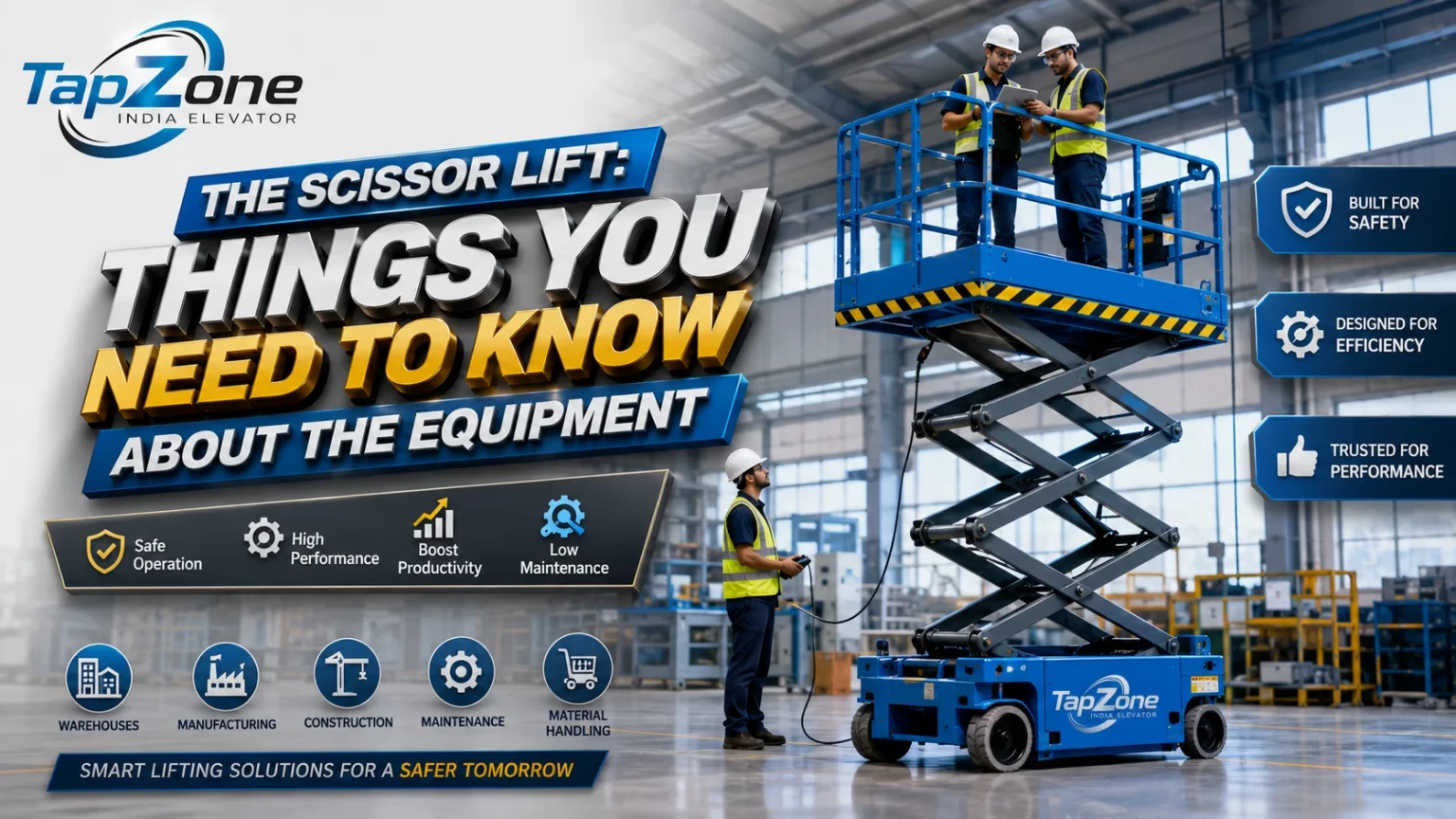
A scissor lift is a vertical lifting platform that operates through interconnected metal supports arranged in a crisscross pattern. These supports expand when the lifting mechanism is activated, allowing the platform to move upward. When the mechanism retracts, the platform moves downward.
Unlike conventional lifting arrangements, scissor lifts provide a stable working platform that can accommodate operators, equipment, and materials within the specified load capacity. Depending on the application, these lifts can be designed with different platform sizes, lifting heights, and load capacities.
Scissor lifts are commonly used in warehouses, factories, workshops, construction areas, and commercial buildings where controlled vertical movement is required.
How Does a Scissor Lift Work?
The working principle of a scissor lift is based on an expandable support mechanism. It uses hydraulic, electric, or mechanical power to move the platform vertically.
Here is how the equipment generally operates:
Power Activation: The operator activates the lifting system through a control panel or operating switch.
Hydraulic Pressure: In hydraulic models, the pump generates pressure that pushes the hydraulic cylinder.
Scissor Mechanism Expansion: The cylinder moves the interconnected arms, causing the structure to expand.
Platform Elevation: As the scissor arms open, the platform moves upward in a controlled manner.
Controlled Lowering: When the lowering function is activated, the mechanism gradually retracts and brings the platform down.
Modern scissor lifts may include safety sensors, emergency stop buttons, overload protection, and limit switches to support safer operation.
Different Types of Scissor Lifts
Scissor lifts are available in different configurations to meet specific industrial and commercial requirements. Selecting the right type depends on the working environment, lifting height, load capacity, and frequency of use.
1. Hydraulic Scissor Lift
Hydraulic scissor lifts use hydraulic cylinders to raise and lower the platform. They are widely preferred in industrial environments because they can handle substantial loads and provide smooth vertical movement. These lifts are suitable for factories, warehouses, and material handling operations.
2. Electric Scissor Lift
Electric scissor lifts operate using electric motors and battery-powered systems. They are suitable for indoor applications where low noise and controlled operation are important. These lifts are commonly used in warehouses, commercial facilities, and maintenance areas.
3. Stationary Scissor Lift
Stationary scissor lifts are installed at a fixed location and are generally used for transferring materials between different floor levels. They are useful in manufacturing plants, loading areas, and production units where regular vertical material movement is required.
4. Mobile Scissor Lift
Mobile scissor lifts are equipped with wheels or a movable base, allowing them to be shifted between different working locations. They are useful for maintenance, installation, and temporary lifting applications.
5. Industrial Scissor Lift
Industrial scissor lifts are designed for demanding working conditions where heavy materials need to be lifted regularly. They can be customized according to the required platform dimensions, lifting height, and load capacity.
Key Features of a Scissor Lift
A well-designed scissor lift offers several features that improve workplace productivity and material handling efficiency.
Strong Structural Design: Heavy-duty steel construction supports stability during lifting operations.
High Load Capacity: Different configurations are available to handle varying material weights.
Smooth Lifting Operation: Hydraulic or electric systems provide controlled platform movement.
Space-Saving Structure: The folding scissor mechanism requires comparatively less space when lowered.
Easy Operation: User-friendly controls make lifting and lowering convenient.
Safety Mechanisms: Safety locks, emergency stop systems, and overload protection can improve operational safety.
Customizable Platform: Platform dimensions can be selected according to application requirements.
Low Maintenance Requirements: Properly designed equipment can deliver dependable performance with regular maintenance.
Applications of Scissor Lifts in Different Industries
Scissor lifts are used across multiple industries because they simplify vertical lifting and improve material handling processes.
1. Manufacturing Industry
Manufacturing facilities use scissor lifts to move raw materials, components, and finished products between different working levels.
2. Warehousing and Logistics
Warehouses use these lifts for loading, unloading, stacking, and transferring goods at different heights.
3. Automobile Industry
Automobile workshops use suitable scissor lifting equipment for vehicle servicing, inspection, and maintenance operations.
4. Construction Industry
Scissor lifts provide elevated working platforms for installation, maintenance, and certain construction activities.
5. Packaging Industry
Packaging facilities use lifting platforms to position materials, machinery components, and products at convenient working heights.
6. Food Processing Industry
Suitable scissor lifts help move materials and equipment across different processing levels, depending on hygiene and operational requirements.
7. Retail and Commercial Facilities
Commercial buildings use lifting equipment for stock handling, maintenance, and warehouse operations.
Important Factors to Consider Before Buying a Scissor Lift
Choosing the right scissor lift is important for achieving efficient and safe operations. Before purchasing equipment, businesses should evaluate the following factors:
Load Capacity: Calculate the total weight of materials, tools, and operators that the platform needs to support.
Lifting Height: Select a model that meets the required working or material transfer height.
Platform Dimensions: Ensure the platform provides sufficient space for the intended application.
Power Source: Choose between hydraulic, electric, or other suitable operating systems.
Installation Space: Check the available floor area and installation requirements.
Safety Features: Look for appropriate safety locks, overload protection, emergency controls, and other protective mechanisms.
Operating Environment: Consider indoor or outdoor conditions, floor quality, humidity, and available power supply.
Maintenance Support: Evaluate the availability of spare parts, technical assistance, and servicing.
Discussing these requirements with an experienced equipment supplier can help businesses select a suitable lifting solution.
Maintenance Tips to Improve Scissor Lift Performance
Regular maintenance plays an important role in ensuring the long-term performance and reliability of lifting equipment. Even high-quality machinery requires periodic inspection and servicing.
Here are some important maintenance practices:
Inspect the hydraulic hoses, cylinders, and connections for leakage or damage.
Check the scissor arms and structural components for cracks, bending, or unusual wear.
Keep the platform clean and free from unnecessary materials.
Examine electrical connections, switches, and control panels regularly.
Lubricate moving joints and pivot points according to manufacturer recommendations.
Check safety devices and emergency lowering systems.
Never exceed the recommended load capacity.
Schedule professional inspections and preventive maintenance.
Following the manufacturer’s maintenance guidelines helps reduce unexpected breakdowns and supports safer equipment operation.
Why Choose TapZone India Elevator for Scissor Lift Solutions?
Selecting the right lifting equipment is not just about choosing a machine with the required lifting capacity. It is equally important to understand the working conditions, installation requirements, and operational needs of your business.
TapZone India Elevator focuses on providing lifting solutions designed around practical industrial requirements. Whether a business needs equipment for material handling, warehouse operations, or manufacturing applications, understanding the specific lifting requirements is the first step towards selecting the right solution.
Before finalizing a scissor lift, businesses should evaluate the equipment’s structural strength, lifting mechanism, platform size, safety arrangements, and maintenance requirements. A properly selected lifting system can help improve workflow, reduce manual handling efforts, and make material movement more organized.
Conclusion
Scissor lifts have become an important part of modern material handling and industrial operations. Their vertical lifting mechanism, stable platform design, and availability in different configurations make them suitable for a wide range of applications. From manufacturing facilities and warehouses to automobile workshops and commercial buildings, these machines help simplify lifting tasks and improve workplace efficiency.
However, selecting the right equipment requires careful consideration of load capacity, lifting height, power source, platform dimensions, and safety features. Regular maintenance and proper operation are equally important for long-term performance.
With a clear understanding of your operational requirements, you can choose an appropriate lifting solution for your facility. TapZone India Elevator can be considered when exploring suitable scissor lift solutions for industrial and commercial lifting applications.