
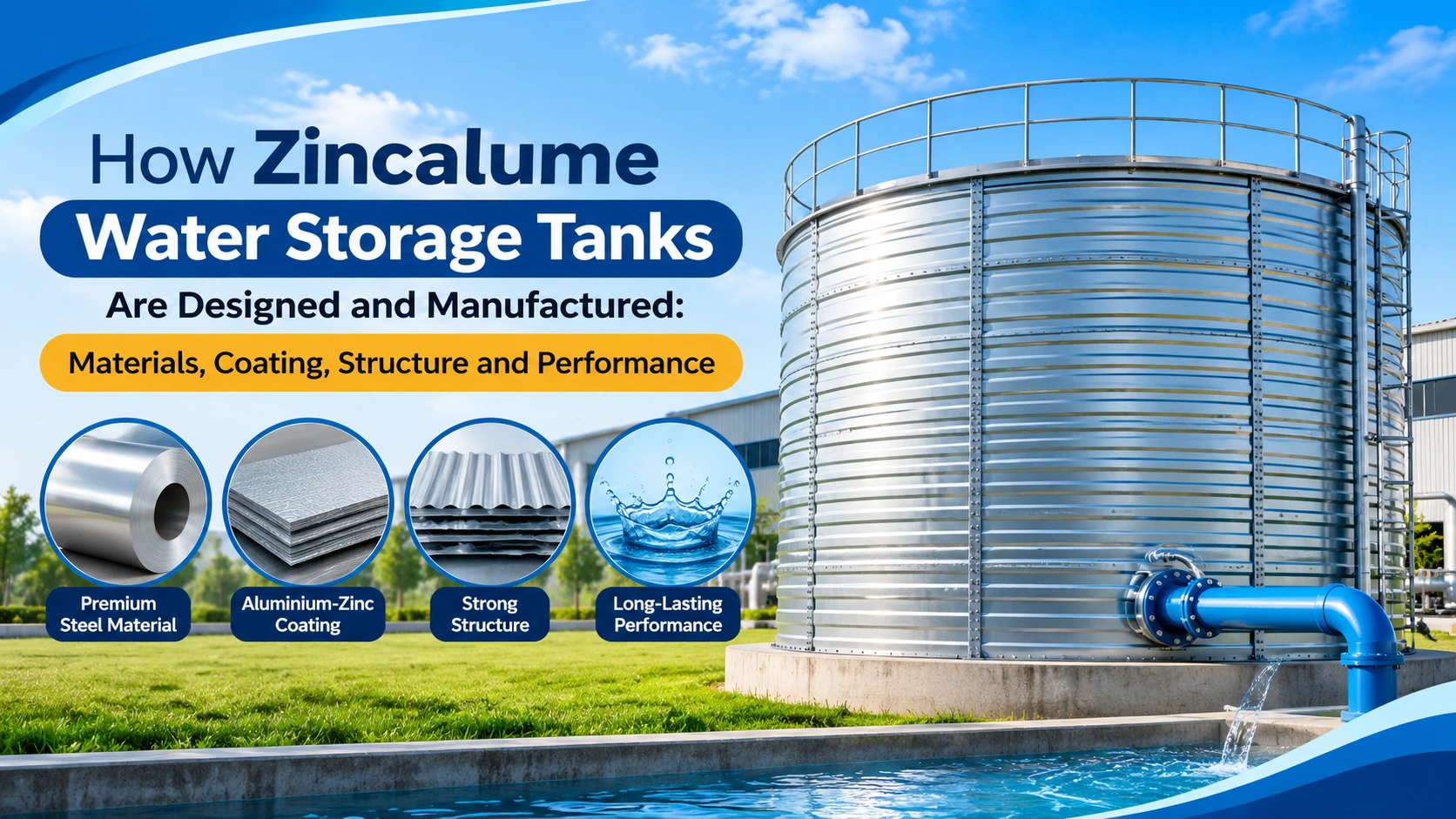
Zincalume water storage tanks are widely considered for projects that require a strong, durable and corrosion-resistant storage solution. These tanks are manufactured using specially coated steel sheets that combine the protective properties of zinc and aluminium. Their construction involves material selection, sheet preparation, coating technology, structural design and proper installation.
Understanding how these tanks are designed and manufactured helps buyers select the right storage solution for their requirements. TSI Steel focuses on steel-based water storage solutions designed to meet different project and industrial storage needs.
What Is a Zincalume Water Storage Tank?
A Zincalume water storage tank is a steel storage structure manufactured using metal sheets coated with an aluminium-zinc alloy. This coating provides protection against corrosion and helps improve the durability of the steel surface.
The coating generally contains approximately 55% aluminium, 43.4% zinc and 1.6% silicon by weight. The exact composition can vary depending on the applicable coating standard and product specification.
Aluminium helps create a protective barrier against environmental exposure, while zinc provides additional protection to the steel surface. Together, these materials help reduce corrosion and support a longer service life under suitable operating conditions.
These tanks can be designed in different shapes and capacities depending on water demand, available installation space and project requirements.
Materials Used in Zincalume Water Storage Tank Manufacturing
Material selection plays an important role in the strength, reliability and overall performance of a storage tank. Manufacturers consider several factors before selecting the steel sheets and other components.
Zincalume Coated Steel Sheets
The main construction material is Zincalume-coated steel. These sheets provide a combination of strength, corrosion resistance and surface protection. Their thickness and grade are selected according to the tank dimensions, water depth and structural requirements.
Structural Support Components
Structural components help maintain the tank’s shape and stability. Depending on the design, these may include steel supports, stiffeners, connection elements and reinforcement sections.
Fasteners and Sealing Materials
Bolts, nuts, washers, gaskets and sealing materials are used in suitable tank designs to connect different sections and help prevent leakage. These components should be compatible with the tank material and intended operating conditions.
Foundation Materials
A properly prepared foundation is essential for supporting the weight of the tank and stored water. Concrete foundations, base supports or other engineered arrangements may be selected according to tank size and site conditions.
How Zincalume Water Storage Tanks Are Designed
Tank design is not limited to selecting the required storage capacity. Engineers must consider water pressure, structural loading, environmental exposure, installation conditions and maintenance requirements.
Storage Capacity Calculation
The first step is determining how much water needs to be stored. The capacity depends on daily consumption, water supply availability, operational requirements and emergency storage needs.
For example, a manufacturing facility may require a different storage capacity from a commercial building or agricultural project. Engineers calculate the required volume before finalising tank dimensions.
Structural Strength and Load Distribution
Water creates pressure on the tank walls, and this pressure increases with depth. Therefore, the tank structure must be designed to handle the expected water load safely.
Engineers consider wall strength, sheet thickness, reinforcement, joints and support arrangements. Proper load distribution helps reduce unnecessary stress and improves structural stability.
Tank Shape and Dimensions
Tank dimensions depend on available space, required capacity and site conditions. Circular tanks are commonly used because their shape can distribute water pressure efficiently around the structure.
The diameter, height and overall arrangement are determined through engineering calculations rather than appearance alone.
Foundation and Site Planning
The foundation must provide uniform support and prevent uneven settlement. Before installation, the site is evaluated for soil conditions, drainage, accessibility and foundation requirements.
A suitable foundation helps protect the tank against structural problems during long-term operation.
Manufacturing Process of Zincalume Water Storage Tanks
The manufacturing process involves several stages to ensure that the tank components meet the required quality and engineering standards.
Steel Sheet Selection and Inspection
Manufacturing begins with selecting high-quality Zincalume-coated steel sheets. The sheets are inspected for coating quality, thickness, surface defects and mechanical properties. Proper material inspection helps maintain consistency throughout production.
Sheet Cutting and Corrugation
The selected sheets are cut according to the required tank dimensions. In many modular tank designs, sheets are corrugated to improve stiffness and help distribute structural loads. The corrugated design also supports the strength of individual wall panels.
Drilling and Panel Preparation
After cutting and forming, holes are prepared at specified positions for bolted connections. Panel edges and joining surfaces are checked to ensure accurate fitting during assembly.
Coating Protection and Quality Checks
The Zincalume coating is an important part of the manufacturing process. It generally contains approximately 55% aluminium, 43.4% zinc and 1.6% silicon. Aluminium provides barrier protection, while zinc offers sacrificial corrosion protection.
Tata Steel Colors+1
Tank Assembly and Liner Installation
In modular tank systems, prepared panels are assembled using suitable bolts, fasteners and sealing arrangements. Depending on the application, an internal reinforced PVC or other suitable liner may be installed to provide a water-contact surface and prevent leakage. The liner material should be selected according to the intended water quality and applicable safety requirements.
Performance and Important Features of Zincalume Tanks
The performance of a Zincalume water storage tank depends on its material quality, engineering design, installation and maintenance.
Some important features include:
Corrosion Resistance: The aluminium-zinc coating helps protect the steel against corrosion caused by environmental exposure.
Structural Strength: Properly designed steel panels provide strength to support stored water.
Flexible Capacity: Tank dimensions can be customised according to project requirements.
Modular Construction: Bolted panel designs can simplify transportation and on-site assembly.
Weather Resistance: Suitable coating systems help protect external steel surfaces against different environmental conditions.
Maintenance Requirements: Proper inspection and maintenance help maintain the tank’s performance over time.
It is important to remember that the coating alone does not make every tank suitable for drinking water. For potable water applications, the internal liner, seals and all water-contact components should meet the relevant drinking-water safety requirements.
Applications of Zincalume Water Storage Tanks
Zincalume tanks are used across different sectors where dependable water storage is required.
Industrial Facilities: Factories and manufacturing units use these tanks for process water, utility water and general storage requirements.
Commercial Buildings: Shopping centres, offices, hotels and commercial complexes require storage systems to maintain a regular water supply.
Agriculture: Farms and agricultural facilities use storage tanks for irrigation, water distribution and other farming activities.
Fire Protection Systems: Specially designed tanks can store water reserves for firefighting systems according to applicable fire safety requirements.
Infrastructure Projects: Construction sites, institutions and large infrastructure developments require reliable water storage facilities for daily operations.
Maintenance Tips for Better Tank Performance
Regular maintenance is necessary to keep a water storage tank in good working condition.
Inspect the external steel panels for visible damage or corrosion.
Check bolts, joints and connections periodically.
Inspect the internal liner for cracks, leakage or damage.
Keep inlet and outlet connections clean.
Check overflow and drainage arrangements.
Clean the tank according to the stored water and usage requirements.
Avoid using unsuitable chemicals or cleaning materials.
Follow the manufacturer’s recommended inspection schedule.
Timely inspection helps identify minor problems before they develop into major maintenance issues.
How to Choose the Right Zincalume Water Storage Tank?
Selecting a suitable tank requires proper evaluation of project requirements. Buyers should consider storage capacity, steel sheet thickness, coating weight, structural design, liner quality and installation conditions.
It is also important to check whether the tank design considers local wind loads, seismic conditions and foundation requirements. Material certifications and relevant engineering standards should be verified before purchasing.
TSI Steel understands the importance of selecting appropriate steel materials and storage tank designs for different project requirements. Evaluating technical specifications and application needs can help buyers make a suitable decision for their water storage projects.
Conclusion
Zincalume water storage tanks offer a practical combination of coated steel construction, structural strength and corrosion protection. Their manufacturing involves several important stages, including material selection, sheet processing, corrugation, panel preparation and assembly. Proper engineering and installation are equally important for reliable performance.
Whether the requirement is for industrial, commercial, agricultural or infrastructure use, selecting the right tank depends on capacity, material quality, design specifications and maintenance planning. With suitable material selection and proper installation, Zincalume tanks can provide a dependable water storage solution for long-term use.