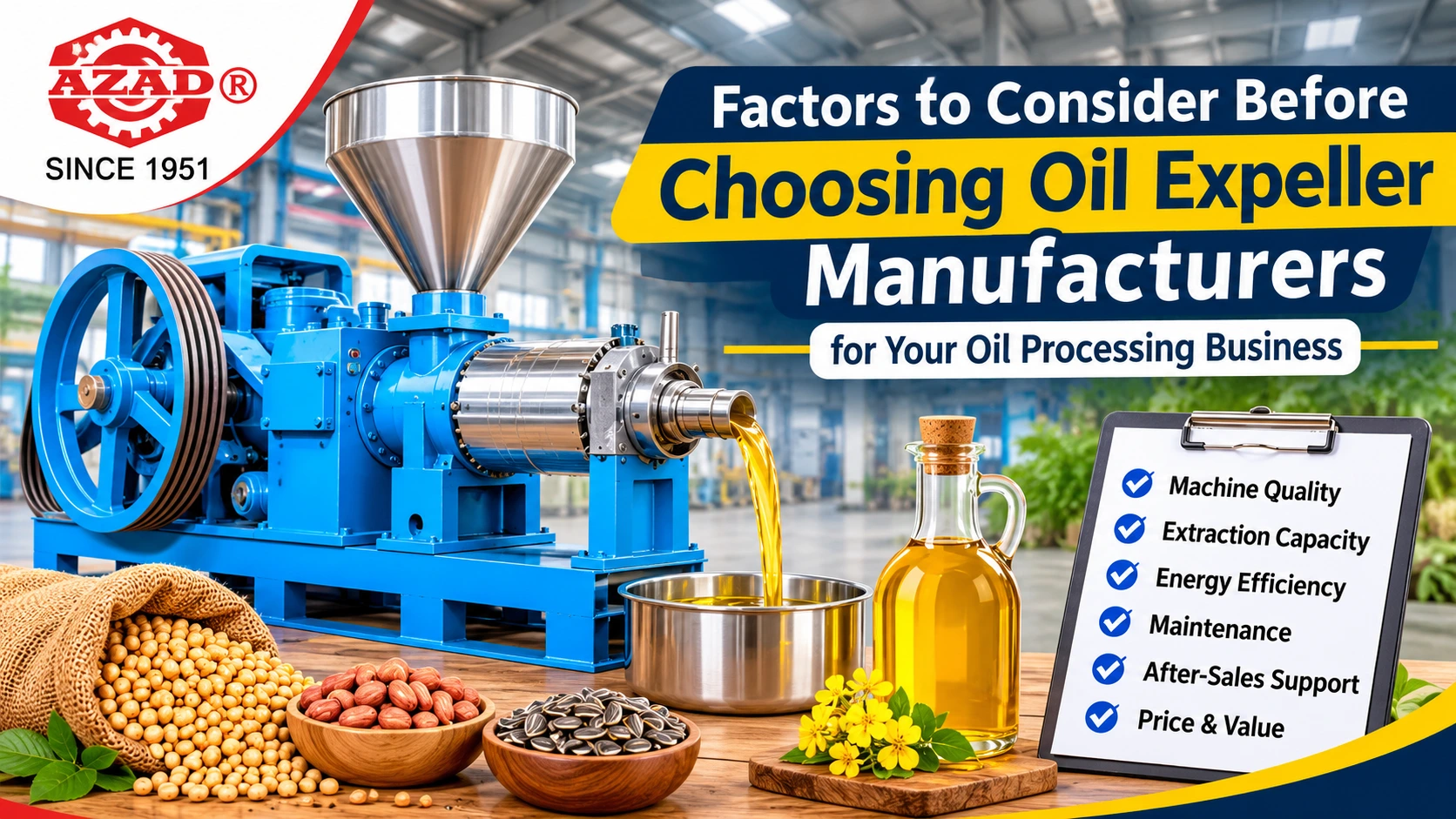
Starting an oil processing business requires proper planning, the right machinery and a reliable manufacturing partner. Among all the equipment used in an oil extraction unit, an oil expeller machine plays an important role in determining production capacity, oil recovery and overall operating efficiency. Selecting the right machine is not just about purchasing equipment; it is about investing in a solution that can support your business for years.
There are several Oil Expeller Manufacturers in the market, but not every manufacturer offers the same machine quality, engineering standards and technical support. Before making a purchase, business owners should understand the machine’s working mechanism, construction, capacity, maintenance requirements and suitability for different oilseeds.
In this guide, we will discuss the important factors to consider before choosing an oil expeller manufacturer for your oil processing business.
1. Understand Your Oil Extraction Requirements
The first step is to identify your actual oil production requirements. Different oil processing businesses work with different types of seeds, production volumes and extraction methods.
For example, mustard, groundnut, sunflower, soybean, sesame and coconut require suitable processing conditions. The machine selected should be compatible with the raw materials you plan to process.
Before contacting manufacturers, consider:
Which oilseeds will you process?
What is your expected daily production?
Do you need small-scale or industrial production?
Will you operate continuously or in batches?
What type of oil quality do you want to achieve?
Having clear requirements will help you select machinery that matches your business operations.
2. Check Machine Quality and Construction
Machine construction directly affects its durability, performance and ability to handle continuous production. A properly engineered oil expeller should have a strong frame, precision-manufactured components and a reliable pressing arrangement.
Important machine components include:
Main Shaft: Transfers mechanical power to the pressing system.
Worm Shaft: Helps move and compress oilseeds inside the pressing chamber.
Pressing Chamber: Creates the required pressure for oil extraction.
Cage Bars: Allow extracted oil to flow out while retaining solid material.
Gearbox: Transfers power and supports the required operating speed.
Motor: Provides the mechanical energy needed for machine operation.
When evaluating Oil Expeller Manufacturers, ask about the materials, manufacturing process and quality inspection followed for these components.
3. Evaluate Oil Extraction Capacity
Production capacity is another important factor when purchasing an oil expeller machine. Every business has different processing targets, so selecting a machine with the appropriate capacity is essential.
Manufacturers may offer machines with different processing capacities depending on the model, motor power and type of oilseed.
A machine with insufficient capacity can slow down production, while an unnecessarily large machine may increase investment and electricity expenses.
Consider the following before finalising a machine:
Hourly seed processing capacity.
Daily production requirements.
Motor power and energy consumption.
Operating hours per day.
Scope for future production expansion.
Always ask manufacturers for practical capacity details based on your specific oilseed instead of relying only on general specifications.
4. Understand the Oil Expeller Working Mechanism
Understanding how an oil expeller machine works helps buyers evaluate its engineering and performance.
The machine generally operates through a mechanical pressing process. First, cleaned and prepared oilseeds are fed into the hopper. The rotating worm shaft moves the seeds through the pressing chamber, where gradually increasing pressure helps release the oil.
The extracted oil passes through openings in the chamber, while the remaining solid material, known as oil cake, is discharged separately.
The efficiency of this process depends on several factors, including:
Screw and shaft design.
Pressing chamber arrangement.
Operating temperature.
Seed moisture and preparation.
Machine speed and pressure conditions.
A well-designed machine should provide stable operation and suitable oil recovery for the intended application.
5. Compare Energy Consumption and Operating Costs
Electricity consumption is an important part of daily oil processing expenses. A machine that requires excessive power can increase operating costs and reduce business profitability.
Before purchasing, check the motor rating, power requirements, operating speed and expected energy consumption.
You should also consider other expenses, such as lubrication, replacement parts, routine maintenance and labour requirements.
Do not select a machine based only on its initial purchase price. Instead, compare its overall operating cost and expected service life.
6. Check Manufacturing Experience and Technical Expertise
A manufacturer’s engineering experience can make a significant difference in machine quality. Experienced manufacturers generally have better knowledge of machine design, component selection, fabrication and industrial operating requirements.
Before choosing a supplier, review their manufacturing capabilities and technical knowledge.
Check whether the manufacturer can explain:
Machine construction and engineering.
Different machine models and capacities.
Suitable applications for different oilseeds.
Installation and commissioning requirements.
Maintenance and troubleshooting procedures.
Azad Engineering focuses on the importance of reliable engineering and suitable machinery selection for oil processing requirements. Choosing a manufacturer that understands your application can help you make a more practical investment.
7. Consider Maintenance and Spare Parts Availability
Regular maintenance is necessary to keep an oil expeller machine working efficiently. Components such as worm shafts, cage bars, bearings and other moving parts may require inspection, servicing or replacement over time.
A machine with a practical maintenance arrangement can reduce unnecessary downtime.
Before purchasing, ask the manufacturer about:
Availability of replacement components.
Recommended maintenance schedules.
Lubrication requirements.
Spare parts supply.
Technical assistance during machine operation.
Easy access to spare parts can help maintain continuous production and prevent long operational delays.
8. Evaluate Safety Features and Ease of Operation
Industrial oil expeller machines contain rotating and high-pressure mechanical components. Therefore, machine safety should never be overlooked.
Look for suitable protective covers, emergency stopping arrangements, electrical safety provisions and accessible maintenance points.
The machine should also have an operating arrangement that workers can understand without unnecessary complications.
Proper installation, operator training and regular inspection are important for maintaining a safe working environment.
9. Compare After-Sales Support and Installation Services
Purchasing an oil expeller machine is only the beginning of the equipment lifecycle. Proper installation, commissioning and technical guidance are equally important.
A reliable manufacturer should provide clear information about machine setup, operating instructions and maintenance procedures.
Before placing your order, confirm whether the manufacturer offers installation guidance, operator training, troubleshooting assistance and warranty support.
Good after-sales service can help your oil processing business avoid production interruptions and manage machine-related issues more effectively.
10. Compare Price with Overall Machine Value
Price is an important purchasing factor, but the cheapest machine is not always the most economical option. A low-cost machine may have limitations in construction quality, production capacity or component durability.
Compare multiple manufacturers based on machine specifications, construction, motor requirements, expected performance and service support.
Request a detailed quotation that includes:
Machine model and technical specifications.
Processing capacity.
Motor power requirements.
Included accessories.
Warranty conditions.
Installation and transportation costs.
This comparison will help you understand the actual value of the equipment before making your final decision.
Conclusion
Choosing the right oil expeller manufacturer requires careful evaluation of machine quality, production capacity, engineering design, energy consumption, maintenance and technical support. A suitable machine can help improve oil extraction operations, maintain consistent production and support the long-term growth of your oil processing business.
Before making a final investment, understand your raw material requirements and compare manufacturers based on technical specifications rather than price alone. Azad Engineering can be considered when exploring engineering and machinery solutions for oil processing requirements. Making an informed decision will help you select equipment that matches your production goals and business needs.
Frequently Asked Questions (FAQs)
1. What is an oil expeller machine?
An oil expeller machine is mechanical equipment used to extract oil from oilseeds such as mustard, groundnut, sunflower, soybean and sesame through a pressing mechanism.
2. Which factors are important when choosing oil expeller manufacturers?
Machine quality, manufacturing experience, processing capacity, energy consumption, spare parts availability and after-sales support are important factors.
3. Which oilseeds can be processed using an oil expeller machine?
Depending on machine design and configuration, oil expellers can process mustard, groundnut, sunflower, sesame, soybean and several other oil-bearing seeds.
4. How can I improve oil expeller machine performance?
Proper seed preparation, suitable moisture levels, correct operating settings, regular lubrication and timely maintenance can help maintain machine performance.
5. Why is machine capacity important for an oil processing business?
Machine capacity determines how much raw material can be processed within a specific period. Selecting suitable capacity helps manage production targets and operating expenses.
6. Is regular maintenance necessary for oil expeller machines?
Yes. Regular inspection, lubrication, cleaning and timely replacement of worn components help maintain reliable machine operation and reduce unexpected downtime.